Cognitive skills
Maths, literacy, problem-solving and symbolic thought.

We believe children learn best when they're having fun. Every block stacked, handcraft created and make-believe tea party is an opportunity to explore, experiment and grow.
Play isn't just fun — it's the foundation of cognitive, social, emotional and physical development. Our play-based learning philosophy lets children discover, create and build confidence in a nurturing, inspiring environment.
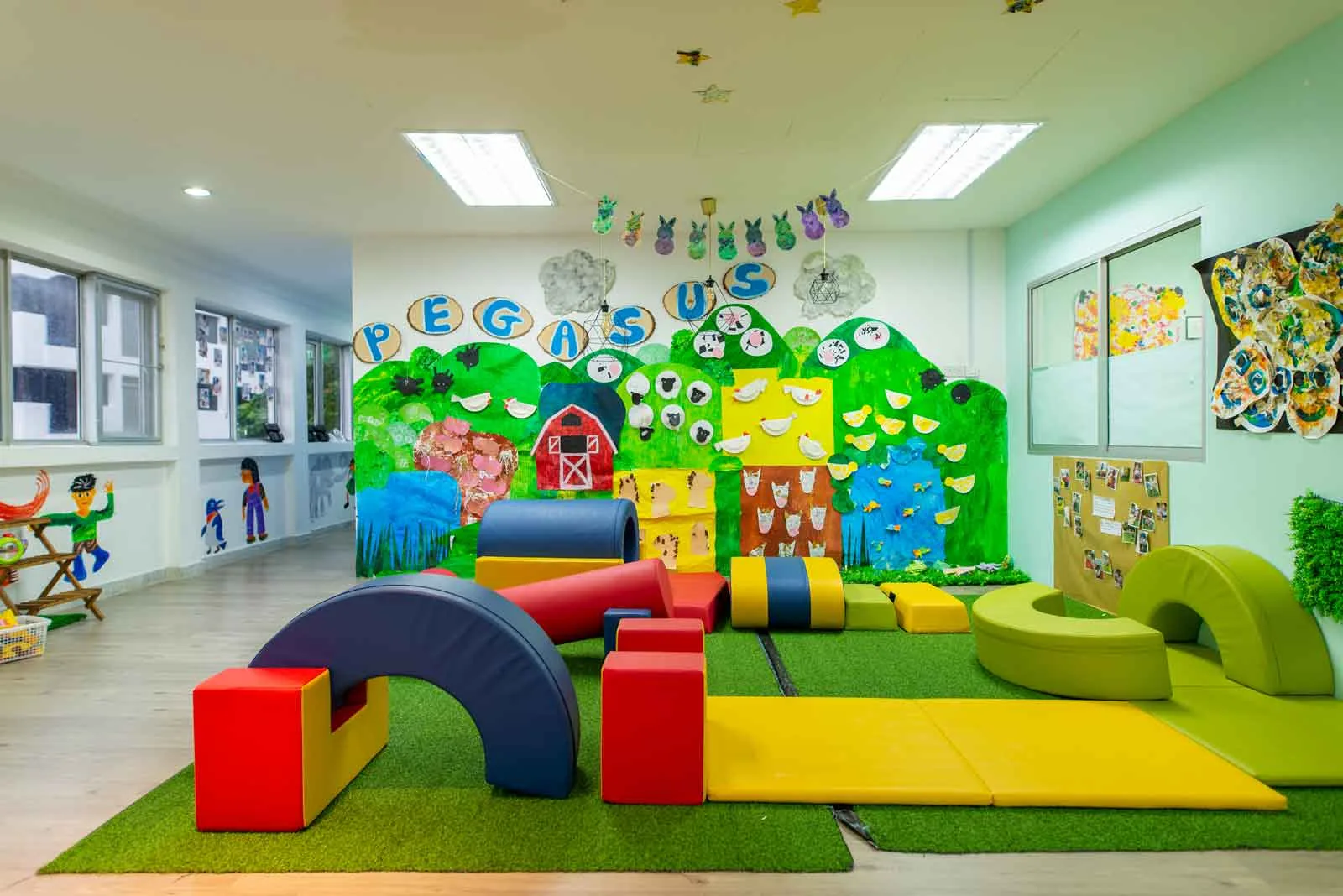
Play-based learning is an educational approach where play is the central vehicle for learning. Children explore, ask questions and make sense of their world through guided and self-initiated activities. Unlike traditional instruction, it allows children to:
This approach reduces academic stress and nurtures curiosity, creativity and independence — qualities essential for confident learners.
Maths, literacy, problem-solving and symbolic thought.
Empathy, turn-taking, collaboration and conflict resolution.
Fine and gross motor coordination, balance and hand-eye coordination.
Expressive arts, story-making and symbolic play.
Curiosity and joy in discovery.
Children negotiate, collaborate and resolve conflicts — life skills in a safe space.
Open-ended, high-quality materials — loose parts, natural elements, art supplies and sensory bins. Provocation corners inspire curiosity.
Teachers observe and join in only when needed, asking open-ended questions like “I wonder what would happen if we mix these colours?”
Themes like ‘Gardens & Bugs’ connect literacy, science, maths and art so children build confidence and agency.
Small-group and partner play cultivates cooperation, empathy and problem-solving in a safe, supportive environment.
Children's play is documented with photos and observations; parents are invited to observe, extend play at home and celebrate achievements.
A child playing is a child learning. Our Reggio-inspired, play-based approach ensures learning is joyful, intentional and holistic.— Pegasus International Preschool
Play-based learning uses play as the central vehicle for learning. Through guided and self-initiated activity — blocks, handcraft, make-believe — children explore, ask questions and make sense of the world, building skills naturally while they enjoy themselves.
Instead of worksheets and rote repetition, children lead their own investigations, test ideas and solve problems. This reduces academic stress and nurtures curiosity, creativity, independence and a positive, lasting relationship with learning.
It supports cognitive skills (early maths, literacy, problem-solving), social-emotional skills (empathy, turn-taking, collaboration, conflict resolution), physical development (fine and gross motor, hand-eye coordination), plus creativity, imagination and confidence.
Teachers prepare an intentional environment with loose parts, natural elements, art and sensory materials, then facilitate responsively — joining in only when needed and asking open-ended questions. Playful themes connect literacy, science, maths and art.
Play-based learning runs throughout our programmes for children from 17 months to 6 years, with activities matched to each child's stage and interests.
Join the Pegasus Parent Journey and receive helpful preschool readiness guides in your inbox.
Book a free, no-obligation school tour, or start your enrolment enquiry today.