
A Delightful Garden Picnic Day
Bird observation, bubble play, movement and shared discovery — how a garden picnic day supports curiosity, physical development, language and confidence at Pegasus International Preschool.
A garden picnic day gives preschool children opportunities to enjoy fresh air, movement and shared experiences beyond the classroom. In a green outdoor setting, children may observe birds, notice plants and water, blow bubbles, move across open spaces and spend time with classmates and teachers.
Outdoor learning can be especially meaningful in Singapore, where parks and gardens offer children direct contact with nature within an urban environment. Real surroundings invite children to look closely, ask questions and respond to what they see.
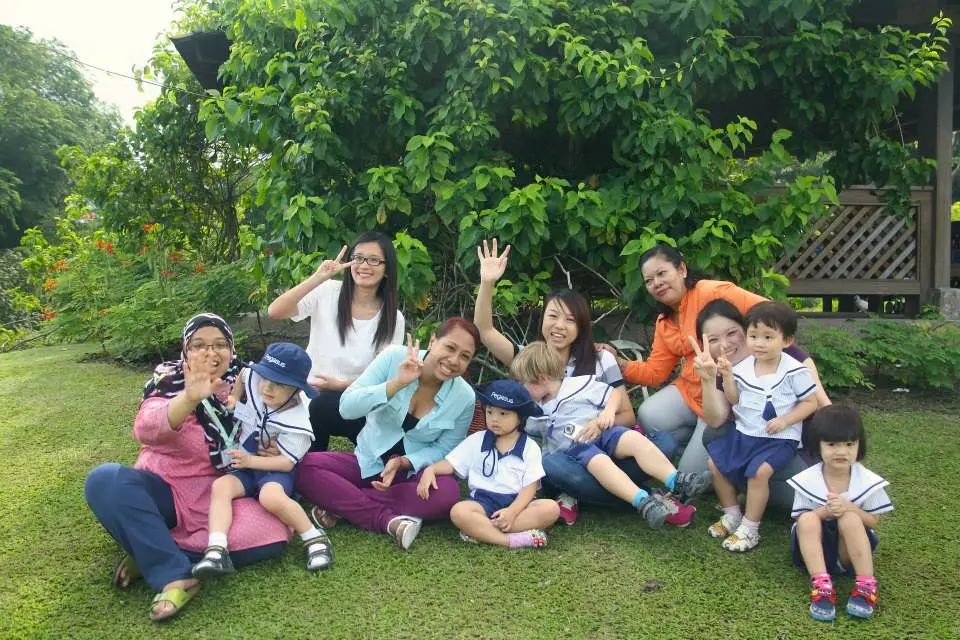
The photographs on this page capture moments of outdoor observation, active play, bubble exploration and group interaction. Experiences such as these can support curiosity, physical development, communication and a growing sense of confidence in unfamiliar but carefully supervised environments.
What Is a Garden Picnic Day in Preschool?
A preschool garden picnic day combines outdoor play, social interaction and nature-based discovery in a relaxed setting.
The experience may include walking through a garden, observing wildlife, joining movement activities, blowing bubbles, sitting together or enjoying time as a group. The purpose is not only to leave the classroom for the day. It is to create opportunities for children to learn from a real environment.
Outdoor spaces offer different sights, sounds, movements and textures from those found indoors. Children may notice birds on the grass, trees moving in the wind, reflections on water or bubbles floating through the air.
These moments can become useful starting points for conversation and inquiry.
Discovering Nature in a Real Environment
Young children often learn best when they can connect ideas with direct experience.
A picture of a bird can introduce a topic, but watching birds move across a field provides additional information. Children may notice how quickly they walk, whether they gather in groups or how they react when people approach.
During an outdoor visit, children may be encouraged to observe:
What children observe
- Birds and other small animals.
- Trees, grass and flowers.
- Water and reflections.
- Shadows and sunlight.
- Movement in the wind.
- Sounds from the surrounding environment.
- Differences between indoor and outdoor spaces.
Teachers do not need to explain every observation immediately. A simple question such as “What do you notice?” can encourage children to look more carefully.
Observing Birds and Other Living Things
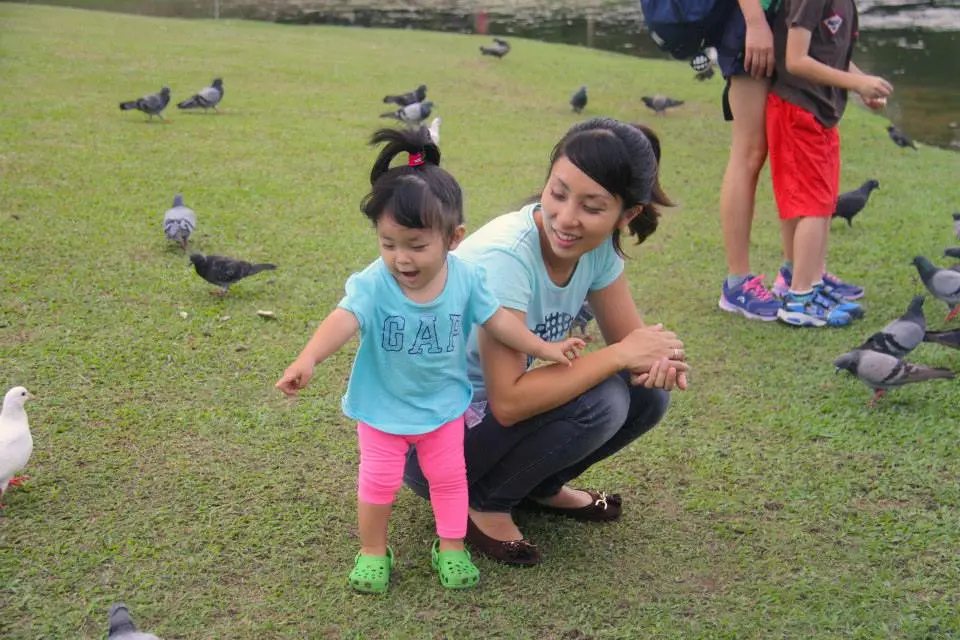
Several photographs show children spending time near birds in an open grassy area.
Observation of living things can support early understanding of animals and their habitats. Children may notice colour, size, movement, sound and behaviour.
Teachers may ask questions such as:
Questions about birds
- How are these birds moving?
- Are all the birds the same colour?
- Why do you think they are gathering here?
- What happens when we move closer?
- Where might the birds go next?
- What do birds need to live?
These questions encourage children to describe what they can see and consider possible explanations.
Any interaction with wildlife should be carefully supervised. Children can also be guided to observe animals respectfully, avoid chasing them and follow the rules of the location.
Learning Through Bubbles
Bubble play may appear simple, but it can involve observation, movement, coordination and early scientific thinking, and you can learn more about play-based learning at Pegasus.
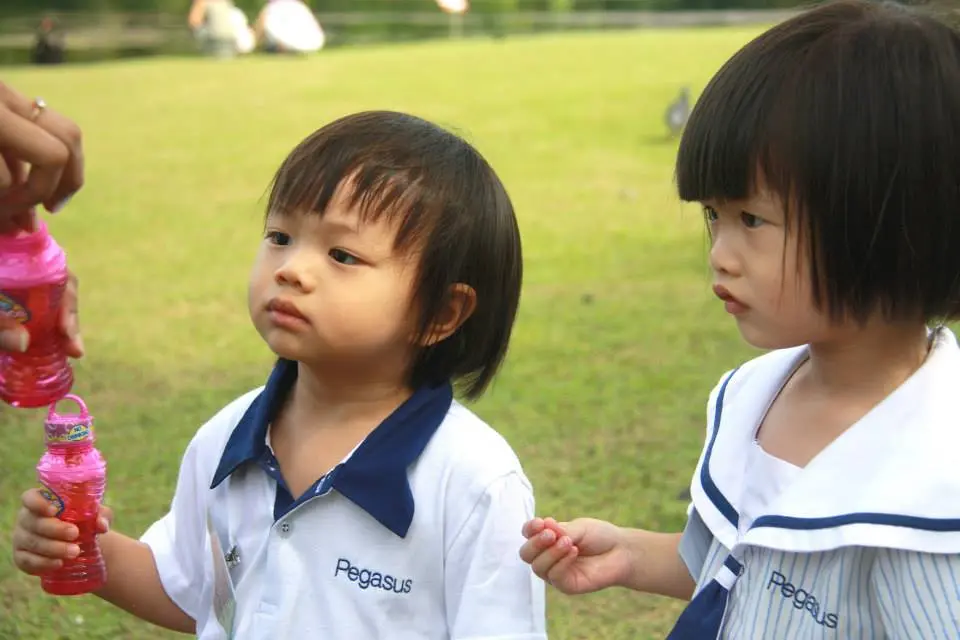
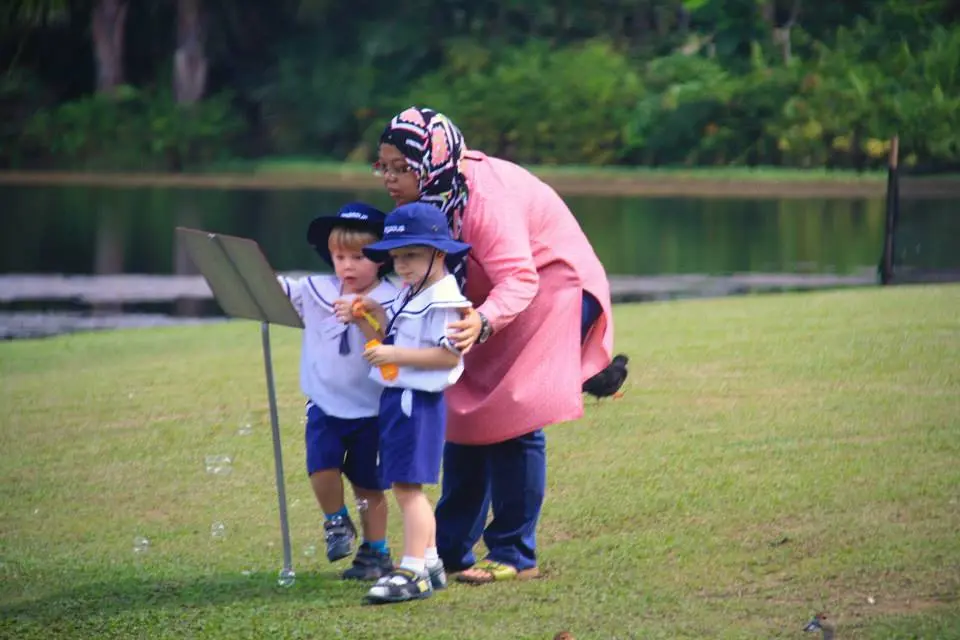
The photographs show children holding bubble containers and attempting to blow bubbles outdoors. During this activity, children may notice that bubbles differ in size, move with the air and eventually burst.
They may explore questions such as:
Questions about bubbles
- What happens when I blow gently?
- Can I make a larger bubble?
- Why do the bubbles move in different directions?
- What happens when a bubble touches the grass?
- Can I catch a bubble without breaking it?
Bubble play also introduces language related to shape, size, speed, direction and quantity.
Children may use words such as round, small, large, high, low, fast, slow, floating and bursting.
Supporting Physical Development Through Outdoor Play
Outdoor areas give children more room to move than most indoor classrooms.
During a garden visit, children may walk, run, stop, turn, balance, reach, point or follow an adult across an open space. These actions can support gross-motor development and body awareness.
Active outdoor experiences may help children practise:
Gross-motor skills
- Balance.
- Coordination.
- Spatial awareness.
- Changes in speed.
- Safe movement around others.
- Stopping and starting.
- Following a route.
- Moving over different surfaces.
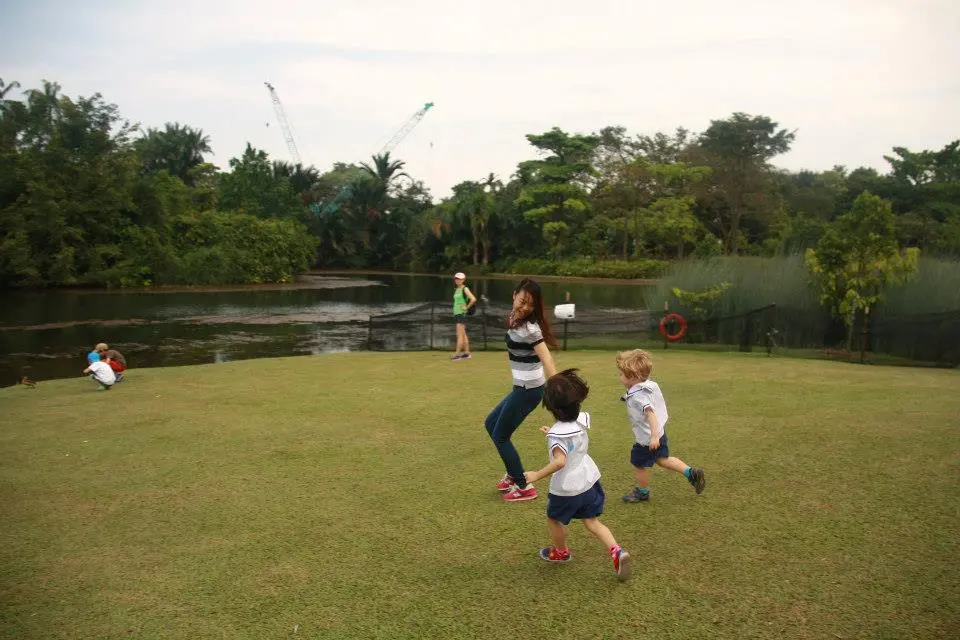
The photographs capture children running and walking across a large grassy area. Movement in an open environment can feel different from moving indoors because children must respond to uneven ground, distance and other people nearby.
Teachers can support safe movement by setting clear boundaries and remaining close to the group.
Developing Fine-Motor and Oral-Motor Control
Bubble play also involves smaller, controlled movements.
Children may need to hold a container steady, grip a wand, dip it carefully and bring it towards the mouth. Blowing requires them to control the flow of air.
These actions may support:
Fine-motor control
- Hand-eye coordination.
- Controlled hand movements.
- Grip and wrist stability.
- Visual tracking.
- Breath control.
- Coordination between the hands and mouth.
Not every child will be able to produce bubbles immediately. Some may need repeated attempts or adult support. The process of trying can be valuable even when the result is not consistent.
Encouraging Curiosity and Inquiry
Outdoor environments naturally invite questions because they are less predictable than a prepared classroom activity.
A bird may suddenly fly away. A bubble may move towards a tree. The wind may change direction. Children may notice an unfamiliar sound or object.
Teachers can use these moments to encourage inquiry by asking:
Questions that spark inquiry
- What do you think is happening?
- Why might that have changed?
- What could we try next?
- How are these two things different?
- What did you expect to happen?
- What did you observe instead?
Inquiry-based learning does not require a formal experiment every time. It begins when children are encouraged to notice, wonder, test and discuss — see how inquiry begins with observation in our programme.
Learning Through the Reggio Emilia-Inspired Approach
A Reggio Emilia-inspired approach values the environment as an important part of learning — you can read more about our Reggio Emilia-inspired approach.
Outdoor spaces can act as an extension of the classroom. A grassy field, garden path, pond or group of birds may provide materials and experiences that cannot be recreated fully indoors.
Children may communicate what they notice through different forms, including:
Ways children communicate
- Pointing.
- Movement.
- Conversation.
- Drawing.
- Photography.
- Storytelling.
- Dramatic play.
- Later classroom projects.
An outdoor observation may continue after the visit. Children might draw the birds they saw, talk about bubbles, compare photographs or revisit questions about movement and nature.
This allows learning to develop across several experiences rather than ending when the outing is over.
The Role of Teachers During Outdoor Experiences
Teachers play an important role in balancing safety, independence and discovery.
Their responsibilities may include:
Teacher responsibilities
- Preparing children for the visit.
- Explaining boundaries and expectations.
- Monitoring the surroundings.
- Supervising interactions with wildlife.
- Supporting children who feel uncertain.
- Asking open-ended questions.
- Introducing useful vocabulary.
- Helping children use materials safely.
- Documenting observations and conversations.
- Encouraging respectful behaviour outdoors.
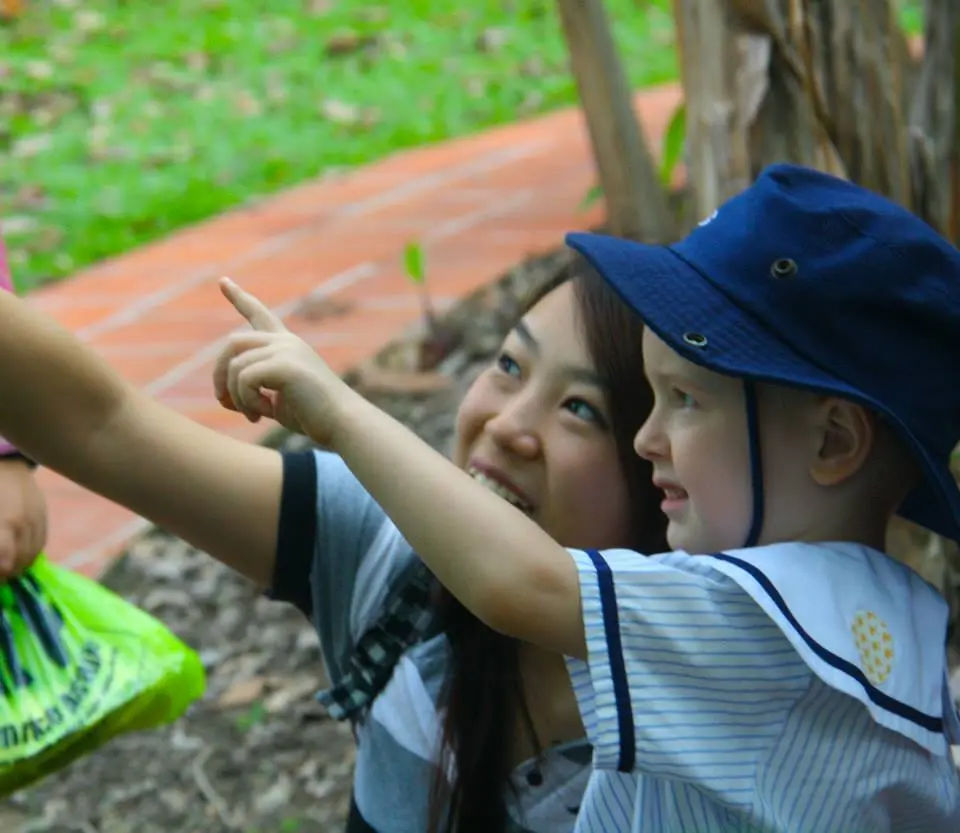
The photographs show adults staying close to children, guiding their attention and participating in activities.
This support helps children feel secure while still allowing them to explore actively.
Building Language Through Outdoor Conversation
A garden visit creates many opportunities for natural conversation.
Children may name what they see, ask for help, describe movement or tell a classmate about a discovery. Teachers can model new words while responding to the child’s immediate experience.
Useful vocabulary may include:
Words children may use
At Pegasus International Preschool, children receive exposure to English, Chinese and Japanese within the school environment. Familiar outdoor experiences may provide meaningful contexts for hearing and using vocabulary in more than one language.
The emphasis should remain on communication and understanding rather than memorising isolated word lists.
Social Learning and Shared Experiences
Outdoor visits can help children learn how to participate as part of a group.
They may need to stay near classmates, wait for materials, listen to instructions and move safely around others. They may also share discoveries and respond to what another child notices.
Social skills may be supported through:
Social skills
- Waiting for a turn with bubble materials.
- Walking with the group.
- Listening when an adult speaks.
- Sharing space with others.
- Observing without interrupting.
- Helping a classmate.
- Joining a group photograph.
- Expressing excitement appropriately.
A shared outing can also create common memories that children may discuss later in the classroom.
Confidence in New Environments
Some children are immediately comfortable outdoors, while others may need time to adjust.
A different location can introduce unfamiliar sounds, surfaces, people and animals. Teachers may help children by staying close, explaining what will happen and offering reassurance.
Children can participate in different ways. One child may run across the grass, while another may prefer to observe quietly beside an adult.
Both forms of participation can be meaningful.
Repeated positive outdoor experiences may help children become more confident in navigating new environments and responding to unfamiliar situations.
Connecting Outdoor Play with the Preschool Curriculum
A single garden experience can connect with several curriculum areas — you can explore our preschool curriculum in Singapore.
Early science
Children may observe animals, plants, weather, air movement and floating bubbles.
Language
They may learn new words, ask questions and describe what they notice.
Physical development
Walking, running, pointing and bubble play involve coordination and control.
Social development
Children practise group routines, turn-taking and shared participation.
Early mathematics
They may compare sizes, count birds or bubbles and use positional language.
Creative expression
Children may later draw, paint or tell stories based on the experience.
This reflects how preschool learning often happens across connected areas rather than through isolated subjects.
How Parents Can Continue Outdoor Learning
Parents can encourage similar experiences through short and manageable outdoor visits.
A neighbourhood park, garden or walking path can provide useful opportunities for observation.
Families may:
- Watch birds from a respectful distance.
- Look for different leaf shapes.
- Blow bubbles in an open area.
- Listen for outdoor sounds.
- Compare shadows.
- Notice changes in the weather.
- Count objects along a path.
- Take photographs of interesting discoveries.
Parents can ask simple questions such as:
Questions parents can ask
- What can you see?
- What can you hear?
- Which object is closest?
- How is it moving?
- What do you think will happen next?
- What would you like to look at again?
The aim is not to turn every outing into a formal lesson. A relaxed conversation can help children build observation and communication skills while enjoying time outdoors.
Photo Gallery
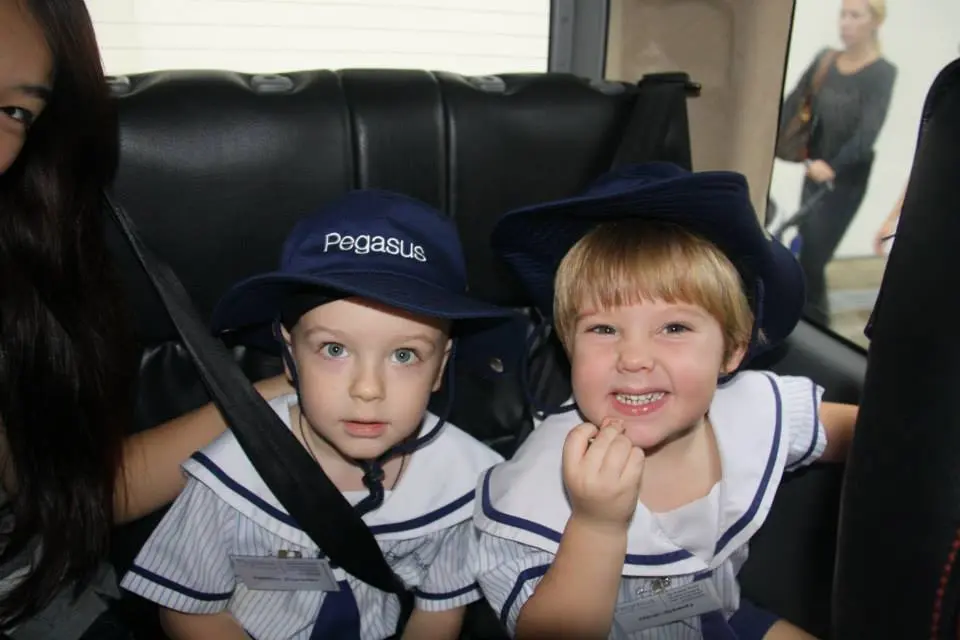
The gallery below captures children enjoying a garden outing through bird observation, bubble play, movement and shared exploration. The photographs show moments of curiosity, adult guidance, group interaction and active participation in a green outdoor environment.
Frequently Asked Questions
What do preschool children learn from outdoor garden activities?
Outdoor garden activities may help children develop observation, communication, physical coordination and social skills. They can also introduce early ideas about plants, animals, weather, movement and the surrounding environment.
How does a garden outing support inquiry-based learning?
A garden provides real and changing situations for children to investigate. They may observe birds, bubbles, plants or water and ask questions about what they see. Teachers can guide learning through open-ended questions rather than providing every answer immediately.
Are outdoor activities suitable for toddlers?
Yes, when the environment, duration and activities are appropriate for their age. Toddlers may participate through walking, observing, pointing, listening and simple supervised play. Close adult support and clear safety boundaries are important.
What can children learn from bubble play?
Bubble play may support hand-eye coordination, breath control, visual tracking and early scientific observation. Children can compare bubble sizes, notice movement and explore how the amount of air they blow affects the result.
How can parents encourage outdoor learning in Singapore?
Parents can visit a neighbourhood park or garden, observe birds and plants, listen for sounds, blow bubbles or take a short nature walk. Asking simple questions can help children notice details and talk about their experience.
Discover Learning Beyond the Classroom
Outdoor experiences can give children space to move, observe, ask questions and connect with the natural world. Garden visits, bubble play and shared exploration may support learning across physical, social, language and early science development.