Our Dialogue with Mr Pollock: Action Painting at Preschool
Colour, movement and collaboration on a large shared surface — how young children explore process art and action painting inspired by Jackson Pollock at Pegasus International Preschool.
Action painting gives preschool children an opportunity to explore art through movement, colour and experimentation. Rather than working only on a small sheet of paper, children may paint across a large shared surface using brushes, squeeze bottles, paint containers and broad physical gestures.
This type of creative experience can be especially engaging in a preschool environment because children can immediately observe how their actions affect the artwork. A squeeze may create a stream of colour, a quick movement may leave a splash, and a brush dragged across the paper may produce a long, textured mark.
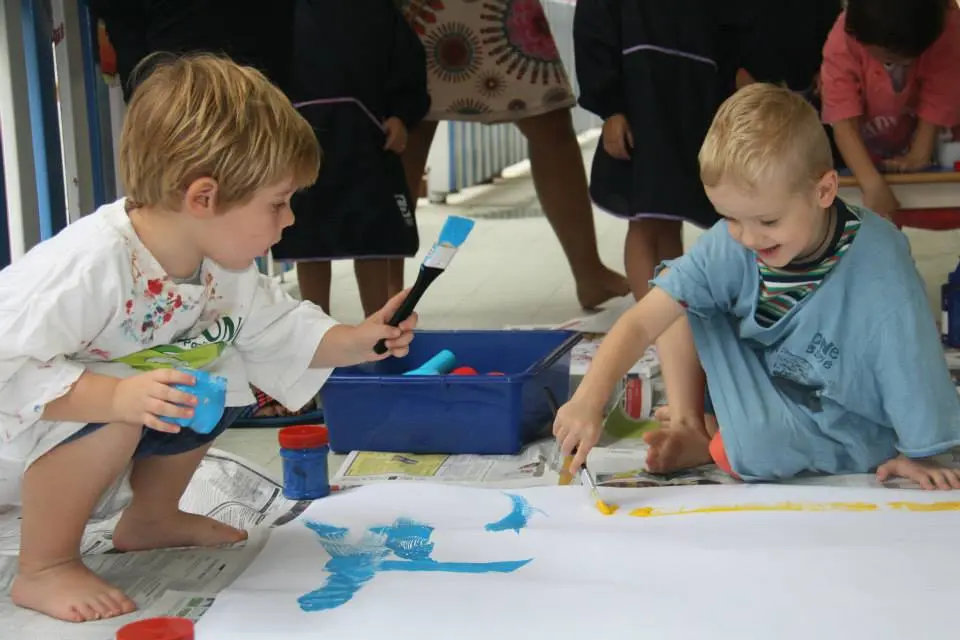
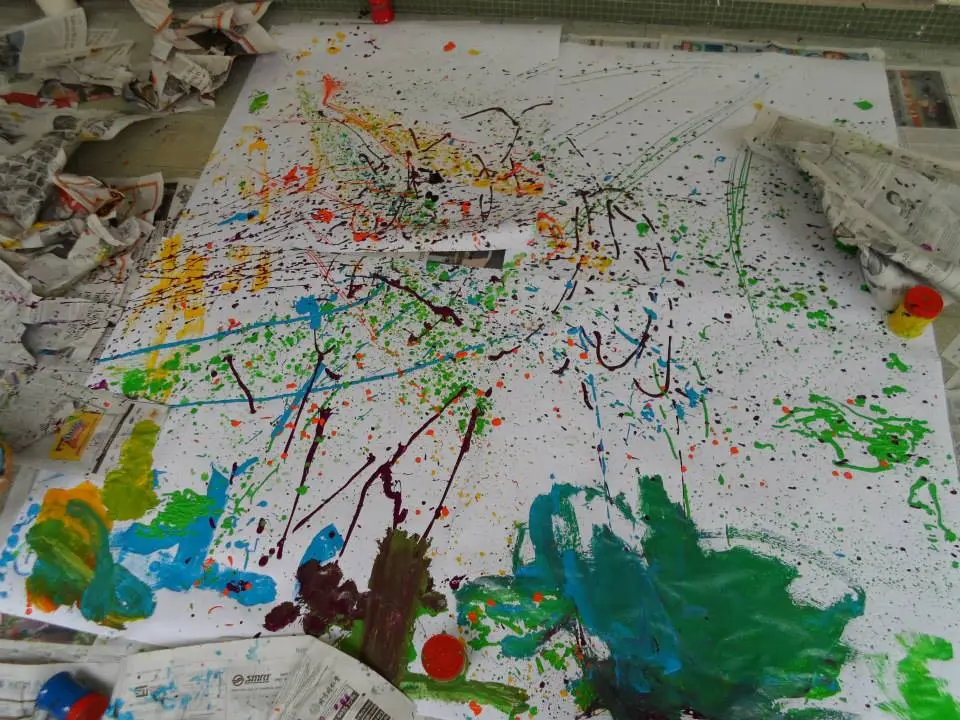
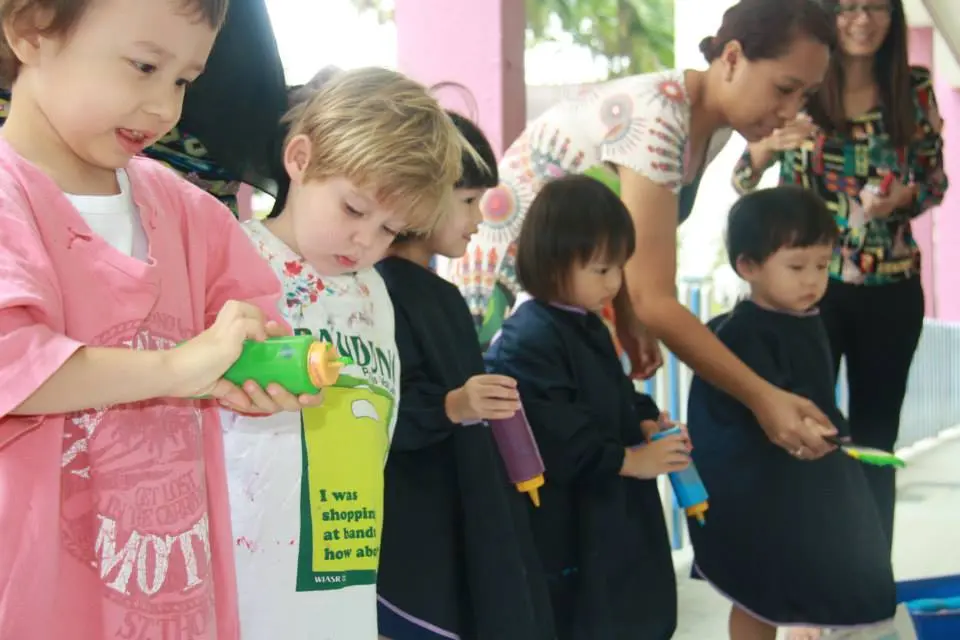
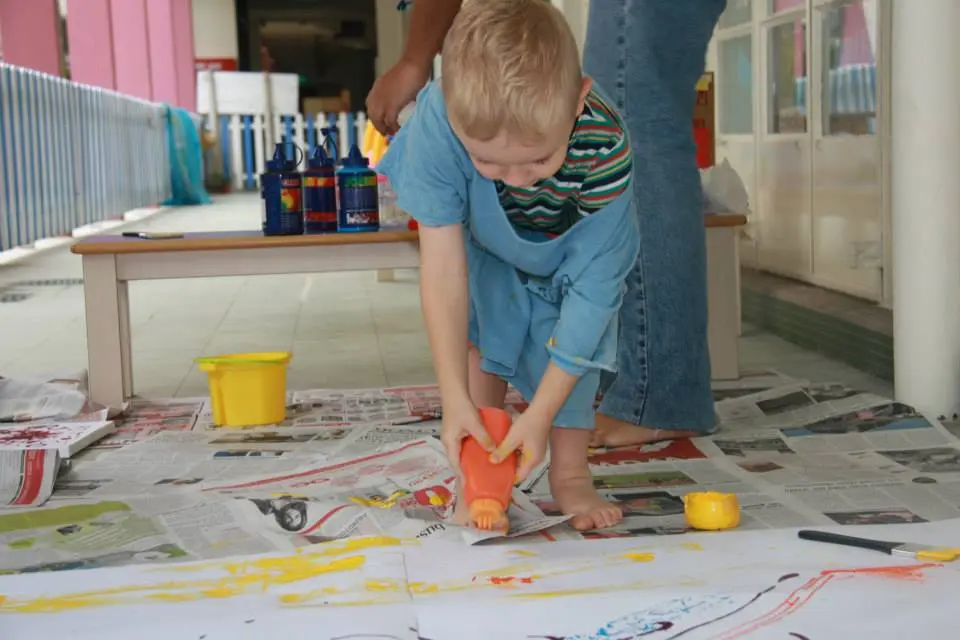
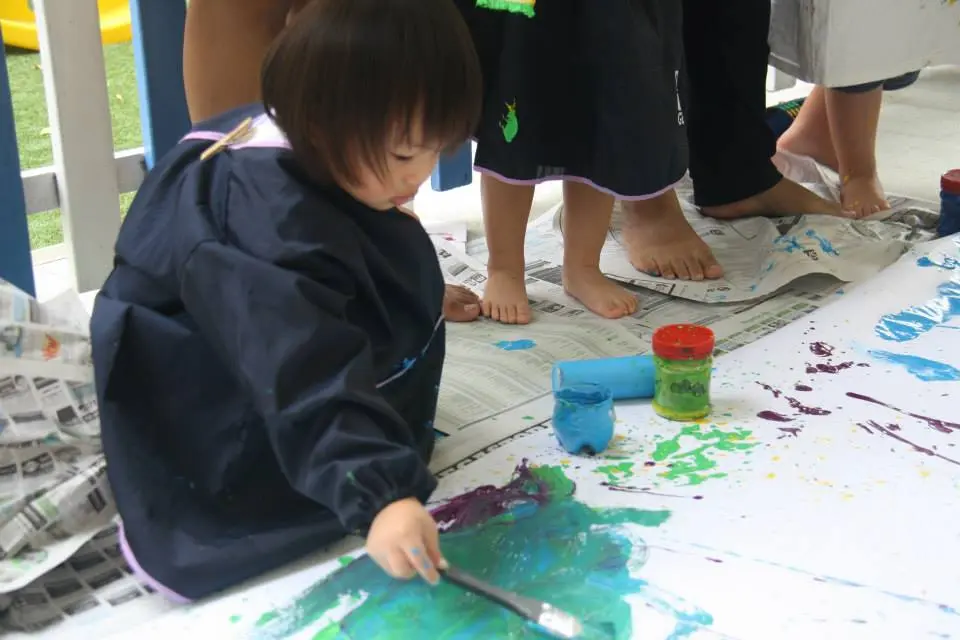
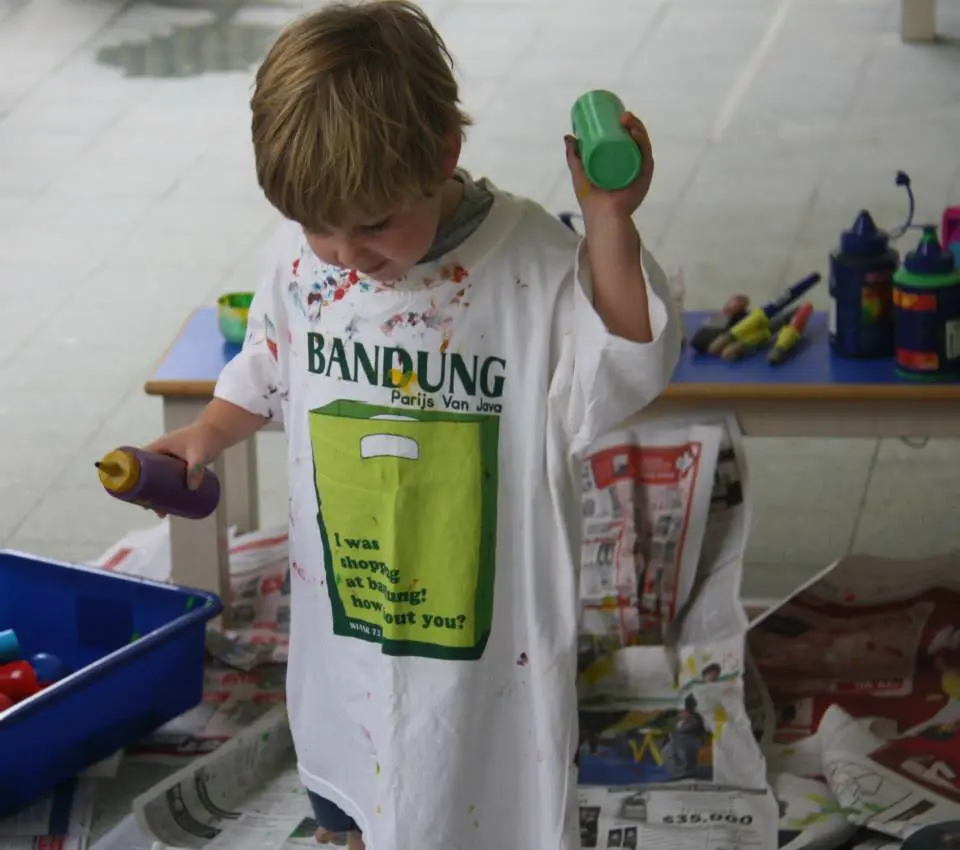
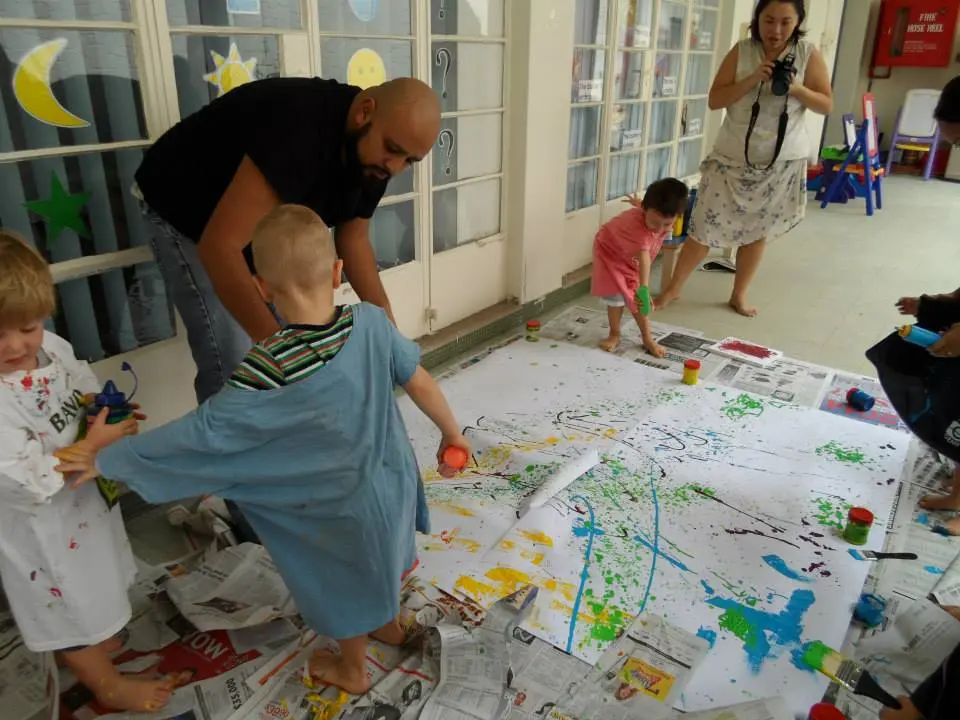
The photographs on this page capture children participating in a collaborative painting experience inspired by the energetic, process-focused qualities associated with action painting. The emphasis is on exploration, choice and discovery rather than producing identical finished pictures.
What Is Action Painting?
Action painting is a form of art in which the physical process of applying paint becomes an important part of the artwork.
Instead of carefully filling in a prepared outline, the artist may drip, pour, splash, squeeze, brush or move paint across a surface. The resulting marks record the movement used to create them.
For preschool children, an action-painting activity may involve:
Ways to explore paint
- Moving brushes across large paper.
- Squeezing paint from bottles.
- Making drips, trails and splashes.
- Experimenting with different colours.
- Changing the speed or direction of movement.
- Working beside classmates on a shared surface.
- Observing how individual marks combine.
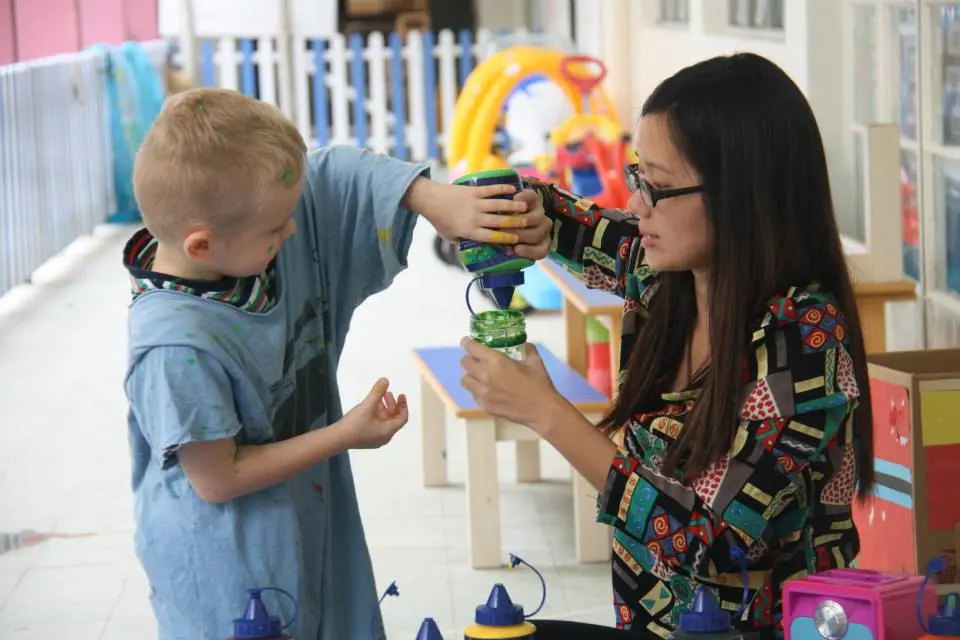
The photographs show children using several painting tools and participating in a large-scale creative experience with adult support.
Exploring Art Through Movement
Large-scale painting invites children to use more than their fingers and wrists. They may move their hands, arms, shoulders and whole bodies as they reach across the paper or change position.
A child may create a short mark with a small movement and a long line with a broader arm motion. Moving quickly may produce a different result from moving slowly.
Through this process, children may begin to notice relationships between:
Relationships to notice
These discoveries connect creative expression with physical awareness.
The experience can remain playful while also encouraging children to observe how their actions shape the final surface — you can discover our play-based learning approach.
Painting on a Large Shared Surface
A large sheet of paper offers possibilities that are different from individual tabletop art.
Children can move around the artwork, approach it from different sides and contribute to areas already marked by others. The painting changes continuously as new colours, lines and splashes are added.
Working on a shared surface may support children in learning to:
Sharing the surface
- Notice where others are working.
- Make space for classmates.
- Wait for access to a tool.
- Contribute individual ideas to a group project.
- Accept that the artwork will keep changing.
- Observe how different marks overlap.
A collaborative painting does not need to belong to one child. It can become a record of the group’s combined movements, choices and discoveries.
Experimenting with Brushes, Bottles and Paint Tools
The photographs show children using brushes and squeeze-style paint containers. Different tools can produce different effects and require different movements.
A brush may create:
Brush marks
A squeeze bottle may create:
Bottle marks
Children may compare the effects and decide which tool they would like to use.
Teachers can encourage this investigation by asking:
Questions about the tools
- Which tool makes the longest line?
- What happens when you squeeze gently?
- How is this mark different from the brush mark?
- Which colour would you like to add next?
- What do you notice where the colours meet?
These questions focus attention on the process without requiring one correct answer.
Discovering Cause and Effect
Action painting gives children an immediate example of cause and effect.
When a child moves a paint-filled brush, a mark appears. When more pressure is applied to a bottle, more paint may come out. When two wet colours meet, they may begin to blend.
Activities such as these can encourage children to form simple expectations and test them.
A child may wonder:
A child may wonder
- Will the paint travel further if I squeeze harder?
- Will the line become wider if I press the brush down?
- What colour will appear when these paints overlap?
- Can I make a mark reach the other side of the paper?
- What happens if I move the tool in a circle?
The child takes an action and observes the result. This is a basic form of inquiry that can occur naturally through creative play.
Learning About Colour and Mixing
A large action painting may include many colours placed beside and over one another.
Children may notice that:
Colour discoveries
- Some colours remain separate.
- Wet colours can blend.
- Lighter colours may be covered by darker paint.
- Overlapping colours can create new shades.
- A small amount of paint looks different from a large area.
- The background affects how a colour appears.
Teachers may introduce words such as bright, dark, light, mixed, separate, thick, thin, transparent and covered.
The aim is not necessarily to teach formal colour theory. Children can first build understanding by observing what happens during direct experimentation.
Sensory Learning Through Paint
Painting can involve visual, tactile and physical sensory experiences.
Children may notice the smell of the paint, the sound of a brush moving across paper and the difference between thick and thin liquid. They may also become aware of paint splashes, wet surfaces and changes in texture as the artwork develops.
Some children enjoy direct sensory contact, while others prefer to use a tool and avoid touching wet paint. Both approaches can be supported.
Teachers may provide:
Materials teachers may offer
- Brushes of different sizes.
- Squeeze containers.
- Rollers or sponges.
- Protective clothing.
- Large working areas.
- Opportunities to observe before joining.
Children should not be pressured to touch paint if they are uncomfortable. Sensory participation can happen at different levels.
Fine-Motor and Gross-Motor Development
Action painting can support both small and large movements.
Fine-motor development
Children may practise:
Fine-motor skills
- Gripping a brush.
- Controlling a squeeze bottle.
- Adjusting pressure.
- Turning a container.
- Dipping a tool into paint.
- Directing the flow towards a chosen area.
Gross-motor development
They may also practise:
Gross-motor skills
- Reaching.
- Bending.
- Squatting.
- Moving around a large surface.
- Extending the arms.
- Changing direction.
- Balancing while painting.
The activity allows physical development to occur within a creative experience rather than as a separate exercise — you can explore our preschool curriculum in Singapore.
Making Choices and Taking Creative Risks
Open-ended painting gives children space to make decisions.
They may choose which colour to use, where to place it, how much paint to apply and whether to repeat or change a movement.
There is no requirement for every child to produce the same result. This can reduce the pressure to make something “correct” and encourage experimentation.
A child might try a new tool, add paint to an unfamiliar area or change direction after observing a classmate.
These small creative risks can help children become more comfortable with uncertainty. They learn that an unexpected mark does not necessarily mean the artwork has gone wrong. It may become part of the developing composition.
Process Art Rather Than Product-Focused Craft
The experience shown in the gallery is best understood as process art.
Process art places emphasis on:
What process art values
- Exploring materials.
- Making choices.
- Testing movements.
- Noticing changes.
- Enjoying the act of creating.
- Allowing different results.
Product-focused crafts often ask every child to follow the same steps and produce a similar object. Such activities may have a place in preschool, but they serve a different purpose.
In process art, the painting does not need to resemble a recognisable object. Lines, splashes, patches and layers can represent genuine exploration.
Parents may therefore see an abstract painting not as an unfinished picture, but as evidence of movement, decision-making and experimentation.
A Preschool Introduction to Jackson Pollock
The title “Our Dialogue with Mr Pollock” suggests a creative response to the action-painting methods associated with artist Jackson Pollock.
For young children, this does not need to involve a detailed art-history lesson. Teachers may introduce the general idea that artists can create pictures in many ways and that some artists use movement, drips and splashes rather than painting only with careful, controlled strokes.
Children may then be invited to respond through their own exploration.
The activity should not require them to copy a particular artwork. Instead, the artist’s methods can serve as a starting point for questions such as:
Questions to spark exploration
- How many ways can paint move?
- What kinds of marks can our bodies create?
- How can several people work on one painting?
- What happens when colours and movements overlap?
This creates a dialogue between an artistic idea and the children’s own discoveries.
Connection with Inquiry-Based Learning
Inquiry-based learning encourages children to investigate rather than receive every answer in advance.
During action painting, children may test different tools, pressures and movements. Teachers can support them by observing and asking open-ended questions — you can see how inquiry develops through experimentation.
Examples include:
Open-ended inquiry questions
- What happened when you changed the bottle angle?
- Which mark surprised you?
- How could you make the paint move further?
- What do you think will happen if these colours meet?
- How is your new mark different from the first one?
- What would you like to try next?
The teacher does not need to direct the child towards one preferred outcome. The questions help the child reflect on what is happening.
Connection with the Reggio Emilia-Inspired Approach
A Reggio Emilia-inspired approach views art materials as tools for thinking and communication — you can learn about our Reggio Emilia-inspired approach.
Children may express ideas through colour, gesture, movement, sound and physical action. These are among the many ways they can represent their experiences.
A large collaborative painting can record:
What the painting records
- Individual movements.
- Shared decisions.
- Changing ideas.
- Interactions between children.
- Responses to different materials.
- Moments of concentration and excitement.
Teachers may document the process through photographs, observations and children’s comments. The documentation can help children revisit the experience later.
They might look at the finished artwork, talk about how it was made or compare photographs of the painting at different stages.
The Teacher’s Role in Action Painting
Although action painting is open-ended, adult preparation and supervision remain important.
Teachers may:
How teachers prepare
- Select washable, child-safe paint.
- Protect the floor and nearby surfaces.
- Provide suitable painting clothing.
- Organise tools where children can reach them.
- Demonstrate safe squeezing and brushing.
- Explain boundaries for paint use.
- Support sharing and turn-taking.
- Observe children’s strategies.
- Introduce descriptive vocabulary.
- Help children reflect after the activity.
The photographs show adults assisting with materials and remaining nearby while children participate.
The teacher’s role is to make exploration possible without taking control of every creative decision.
Collaboration and Communication
A shared artwork naturally creates opportunities for communication.
Children may ask for a colour, comment on a classmate’s mark or point out an area they would like to paint. They may also need to negotiate space and tools.
Useful phrases may include:
Phrases children may use
- May I have a turn?
- Which colour are you using?
- Can I paint here?
- Look at this line.
- The colours are mixing.
- I need more paint.
- Let us make another mark.
At Pegasus International Preschool, children receive exposure to English, Chinese and Japanese within the school environment. Creative group activities may provide meaningful situations for hearing and using familiar language.
Continuing Action Painting at Home
Parents can offer a smaller version of action painting at home using simple, washable materials.
A suitable setup might include:
- A large sheet of paper.
- Washable paint.
- Brushes or sponges.
- Squeeze bottles with adult supervision.
- Old clothing or an art apron.
- Newspaper or a protective mat.
- An outdoor or easily cleaned working area.
Parents can encourage exploration by asking:
Questions parents can ask
- What kind of mark did that tool make?
- What happens when you move more slowly?
- Which colours are meeting?
- Can you make a straight line and a curved line?
- What would you like to try next?
It is helpful to avoid directing the child to create a specific picture. The purpose is to explore movement and paint rather than reproduce a model.
Photo Gallery
The gallery below captures children exploring action painting through brushes, squeeze bottles, broad movements and collaborative work on a large shared surface. The photographs show moments of colour experimentation, physical engagement, adult guidance and creative decision-making.
Frequently Asked Questions
What is action painting for preschool children?
Action painting is an open-ended art experience in which children apply paint through movements such as brushing, squeezing, dripping or splashing. The process and the marks created by movement are more important than producing a specific picture.
What can children learn from large-scale painting?
Large-scale painting may support colour exploration, physical coordination, spatial awareness, decision-making and collaboration. Children can also investigate how different tools, movements and amounts of pressure change the marks they create.
How does action painting support inquiry-based learning?
Children can test ideas by changing tools, colours, movement or pressure and then observing the results. Teachers support the inquiry by asking questions and encouraging children to explain what they notice.
Is process art suitable for toddlers?
Yes, when safe, washable materials and close adult supervision are provided. Toddlers may explore through simple brush movements, squeezing, touching or observing. Alternative tools can be offered to children who prefer not to touch paint.
How is action painting connected to the Reggio Emilia approach?
A Reggio Emilia-inspired approach recognises painting, movement and gesture as ways children can communicate and investigate ideas. Teachers may document the creative process and invite children to revisit their artwork and observations.
Discover Creative Learning at Pegasus
Action painting is one of the many ways children explore colour, movement and materials while making choices and contributing to a shared creative experience. Visit us to explore the learning spaces and speak with our team about the programme suitable for your child.