
Children’s Day Celebration at Preschool
Simple food preparation, group games, music and colourful balloons — how young children celebrate together and build everyday skills at Pegasus International Preschool.
Children’s Day provides an opportunity for preschool children to enjoy a shared celebration while participating in meaningful, age-appropriate activities. Experiences may include simple food preparation, group games, music, movement and time spent with classmates and teachers.
In a preschool environment in Singapore, celebrations such as these can support more than enjoyment alone. Children may practise taking turns, following simple instructions, using everyday tools and communicating with others. They can also build confidence by participating in activities within a familiar and supportive setting.
The photographs on this page capture moments involving sandwich preparation, shared snacks, colourful balloons and group play. Together, they show how a preschool celebration can combine fun, practical learning and social interaction.
Celebrating Children Through Shared Experiences
Children’s Day is a time to recognise childhood and create enjoyable experiences that children can share with their friends and teachers.
In preschool, a celebration does not need to depend only on decorations or entertainment. It can include activities that invite children to participate actively.
They may help prepare a simple snack, join a movement game, hold balloons, follow instructions or sit together during a shared meal. These moments can create a sense of belonging while supporting everyday learning.
The photographs capture a lively classroom experience involving children, teachers, food and group activities. Although the exact programme is not confirmed by the photographs alone, the images show a celebration centred on participation and togetherness.
Learning Through Simple Food Preparation
Food preparation can be a valuable practical activity for preschool children when suitable ingredients and child-safe tools are used.
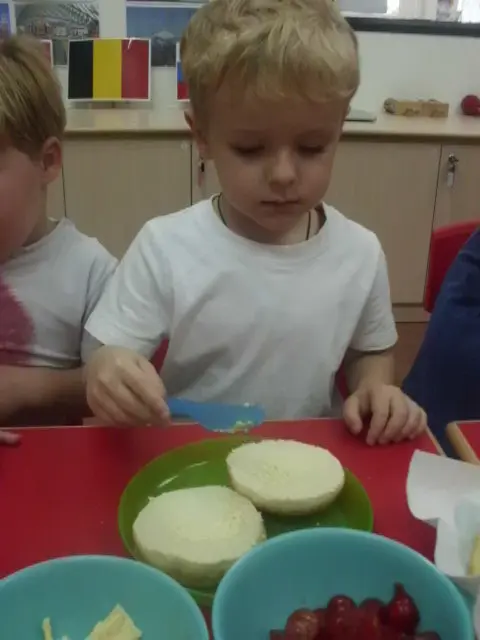
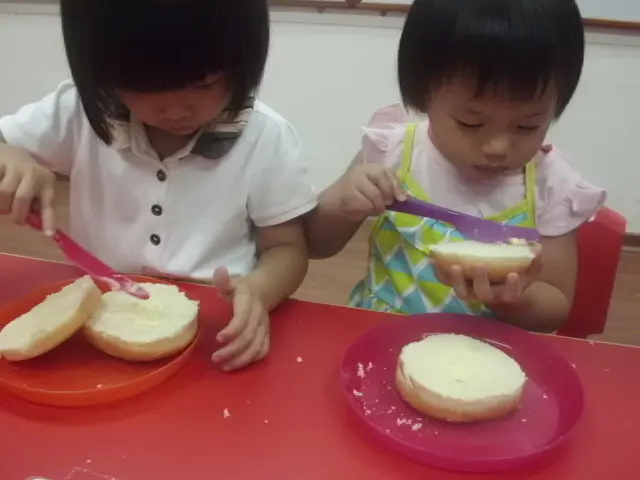
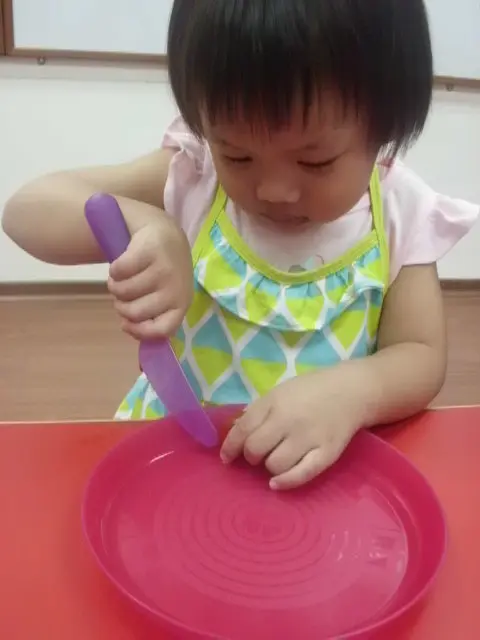
The gallery shows children spreading a filling onto bread or buns using plastic utensils. Activities such as these may help children practise controlled movements while following a simple sequence.
A food preparation experience may involve steps such as:
Steps in the activity
- Choosing a plate or piece of bread.
- Holding a utensil safely.
- Scooping or spreading a filling.
- Placing ingredients onto the bread.
- Waiting for assistance when needed.
- Tidying the preparation area.
- Eating the completed snack.
These steps can help children understand that everyday tasks often happen in an order.
Teachers may support children by demonstrating how to use the materials, offering help and allowing them to complete suitable parts independently.
Building Independence Through Everyday Tasks
Young children often enjoy doing practical tasks for themselves. Spreading, serving and arranging food can give them an appropriate level of responsibility.
A teacher may encourage children to try before stepping in to complete the task for them. The aim is not to produce a perfect sandwich. The value comes from the child’s participation.
Activities such as these may support:
Skills this supports
- Independence.
- Concentration.
- Patience.
- Decision-making.
- Confidence using familiar tools.
- Responsibility for personal belongings and food.
Children may also learn to ask for assistance when something is difficult. Knowing when and how to seek help is itself an important part of developing independence.
Fine-Motor Skills and Hand-Eye Coordination
Food preparation involves many controlled hand movements. A child may need to hold the bread steady with one hand while moving a plastic knife or spreader with the other.
This type of activity can support bilateral coordination, which means using both sides of the body together.
Children may practise:
Fine-motor movements
- Gripping an utensil.
- Applying appropriate pressure.
- Moving the hand across a surface.
- Keeping food on the plate.
- Picking up small ingredients.
- Coordinating vision and hand movement.
These physical skills also contribute to other areas of development, including drawing, early writing, dressing and self-care.
The photographs show children concentrating closely as they use utensils. Careful attention is often required even for tasks that appear simple to adults.
Exploring Food, Texture and Everyday Vocabulary
Food activities can introduce children to a range of sensory experiences.
They may notice that one ingredient is soft while another is firm. They may compare smooth spreads with textured food or observe differences in colour, shape and smell.
Teachers can introduce useful words during the activity, including:
Words to introduce
Vocabulary becomes more meaningful when it is linked to something the child is actively doing.
Children may also communicate preferences, make simple choices or describe the ingredients they can see.
Sharing Food in a Social Setting
Eating together can be an important social experience in preschool.
Children may sit with classmates, observe what others are eating and participate in simple conversations. They may learn to wait, share table space and follow classroom routines.
Teachers may use shared snack times to reinforce habits such as:
Mealtime habits
- Washing hands before handling food.
- Remaining seated while eating.
- Using utensils appropriately.
- Asking politely.
- Waiting for a turn.
- Cleaning up afterwards.
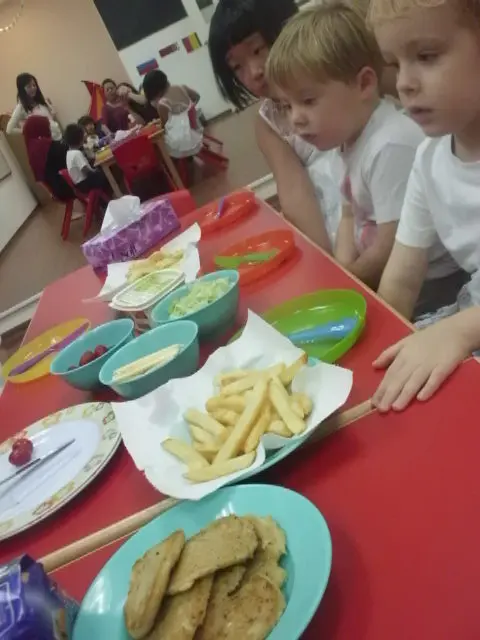
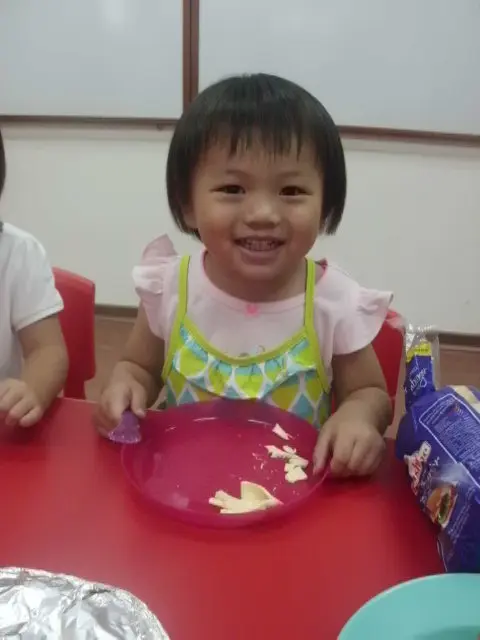
The photographs include tables arranged with different food items and children observing or participating in the preparation.
Any food-based preschool activity should take account of allergies, dietary requirements, hygiene and age-appropriate ingredients.
Group Games, Music and Movement
The gallery also shows children taking part in what appears to be a group movement game involving chairs.
Games of this nature may encourage children to listen for cues, move around a shared space and respond when the music or instruction changes.
During supervised group games, children may practise:
Skills in group games
- Listening.
- Stopping and starting.
- Moving safely around others.
- Following a simple rule.
- Waiting for another round.
- Managing excitement.
- Accepting different outcomes.
For young children, teachers may adapt traditional games so that the focus remains on participation rather than winning or elimination.
The aim can be to create an inclusive experience where everyone remains involved, and you can learn how play supports children’s development across the day at Pegasus.
Learning to Participate as Part of a Group
Celebrations give children many opportunities to practise being part of a community within our Reggio Emilia-inspired learning environment.
Not every child will respond in the same way. Some children may join an activity immediately, while others may prefer to watch before participating.
A supportive preschool environment can allow children to enter the experience at a pace suited to them.
Teachers may:
How teachers help
- Explain what will happen.
- Model the activity.
- Keep instructions short.
- Invite rather than pressure.
- Offer reassurance.
- Adapt activities for different comfort levels.
- Recognise participation in different forms.
This can help children feel secure while becoming more confident in group settings.
Colourful Balloons and Visual Excitement
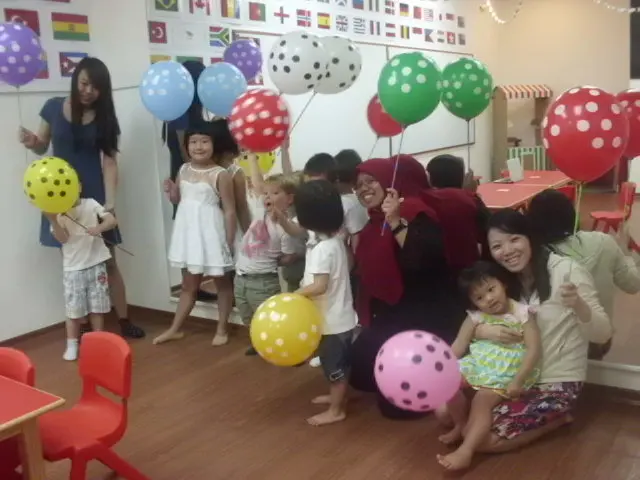
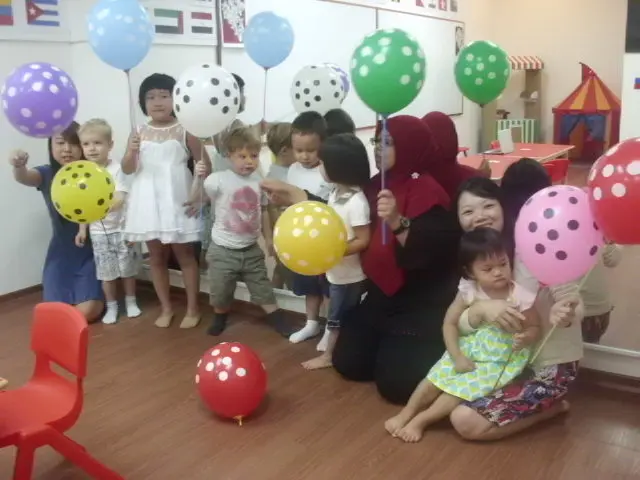
The photographs show children and adults gathered with brightly coloured, patterned balloons.
Decorations can help make a celebration feel distinct from an ordinary school day. They may also create opportunities for observation and conversation.
Children may notice:
What children notice
- Different colours.
- Spots and patterns.
- Large and small sizes.
- Balloons floating or moving.
- Similarities and differences.
Teachers can use these observations naturally by asking questions such as:
Questions to ask
- Which balloon has black spots?
- Can you find two balloons of the same colour?
- Which balloon is higher?
- What happens when the balloon moves?
Even within a celebration, simple moments can support language and early mathematical thinking.
Communication and Language Development
Children’s Day activities can provide many reasons for children to speak and listen.
During food preparation, a child may ask for an ingredient or explain what they are doing. During a game, they may listen for instructions. During group photographs or balloon play, they may respond to questions and communicate with classmates.
Useful language may include:
Phrases children may use
- Can I have a turn?
- May I use this?
- I need help.
- I am finished.
- Let us play together.
- Which one would you like?
- What happens next?
At Pegasus International Preschool, children receive exposure to English, Chinese and Japanese within the school environment. Shared activities can create natural situations for hearing and using familiar words and phrases.
Connecting Celebrations with Play-Based Learning
Play-based learning recognises that children learn through active experiences, social interaction and experimentation.
A Children’s Day celebration may combine several forms of play and learning:
Forms of play
- Practical play through food preparation.
- Physical play through movement games.
- Social play with classmates.
- Sensory exploration through food and materials.
- Imaginative conversation around decorations and activities.
These experiences may not look like formal lessons, but they can still involve concentration, communication, coordination and problem-solving.
The value lies in how children participate, make choices and connect new experiences with what they already know.
Supporting Inquiry and Curiosity
Teachers can encourage curiosity even during a festive activity, and you can discover our inquiry-based learning approach.
Rather than giving only instructions, they may ask children to predict, compare or explain.
For example:
Questions to explore
- What do you think will happen when you spread this?
- Which tool is easier to use?
- How can we divide the food fairly?
- Why do you think the balloon stays in the air?
- How are these balloons different?
- What should we do first?
Open-ended questions encourage children to think about their actions and share their ideas.
Not every question needs a long or technically correct answer. The purpose is to encourage observation and conversation.
The Teacher’s Role During Preschool Celebrations
Teachers help create an environment that is enjoyable, safe and manageable.
Their role may include:
What the role involves
- Preparing child-appropriate materials.
- Checking dietary and safety requirements.
- Explaining activities clearly.
- Supervising utensils and food handling.
- Helping children take turns.
- Supporting children who feel unsure.
- Adapting games to suit the group.
- Encouraging participation without pressure.
- Maintaining familiar routines where possible.
The photographs show adults present alongside the children during several activities.
This support allows children to take an active role while receiving guidance when needed.
Continuing the Experience at Home
Parents can build on similar experiences through simple family activities.
A child might help prepare breakfast, spread a filling on bread, arrange fruit on a plate or choose decorations for a family occasion.
Parents can encourage involvement by offering manageable responsibilities such as:
- Carrying an empty plate.
- Placing ingredients into a bowl.
- Spreading with a child-safe utensil.
- Arranging food.
- Counting items.
- Choosing between two options.
- Wiping the table afterwards.
Families may also enjoy playing a simple movement game, having a small dance session or talking about what makes a celebration meaningful.
Questions such as “What did you enjoy?” or “What would you like to do again?” can help children recall and communicate their experiences. You can explore our preschool curriculum in Singapore to see how everyday celebrations connect with learning.
Photo Gallery
The gallery below captures children participating in a preschool celebration through simple food preparation, shared snacks, colourful balloon activities and group play. The photographs show moments of concentration, social interaction, movement and enjoyment within the classroom environment.
Frequently Asked Questions
What activities are suitable for a preschool Children’s Day celebration?
Suitable activities may include simple food preparation, music and movement, group games, storytelling, art, decorations and shared snacks. Activities should be age-appropriate, inclusive and carefully supervised.
What can children learn from preparing food at preschool?
Simple food preparation may help children develop independence, fine-motor control, sequencing, hand-eye coordination and everyday vocabulary. It can also introduce hygiene, table routines and responsible use of child-safe utensils.
How do group games support preschool development?
Group games can encourage listening, movement, turn-taking and awareness of others. Teachers can adapt games so that the emphasis remains on participation, enjoyment and cooperation rather than competition.
How do preschool celebrations support social development?
Celebrations bring children together in a shared experience. They may practise communicating, sharing space, following routines and participating as part of a group within a familiar environment.
How can parents create similar learning experiences at home?
Parents can invite children to help prepare a simple snack, arrange food, choose decorations or take part in a family movement game. Giving children manageable responsibilities can support independence and confidence.
Experience Preschool Learning and Celebration at Pegasus
Shared celebrations can bring together practical learning, play, communication and joyful interaction. You are welcome to visit the preschool, view the classrooms and speak with the team about the programme suitable for your child.