
Happy Halloween at Pegasus International Preschool
A playful preschool celebration featuring costumes, creative crafts, imaginative role-play and shared classroom activities at Pegasus International Preschool.
Halloween can provide preschool children with opportunities to explore imagination, creativity and social play in a familiar classroom environment. Through costumes, craft activities, decorations and shared experiences, children may experiment with different characters, colours, shapes and materials.
In a preschool setting in Singapore, celebrations such as these can be planned in an age-appropriate and welcoming way. The focus can remain on playful participation rather than frightening themes. Children may dress up, create simple decorations, join group activities and communicate through pretend play.
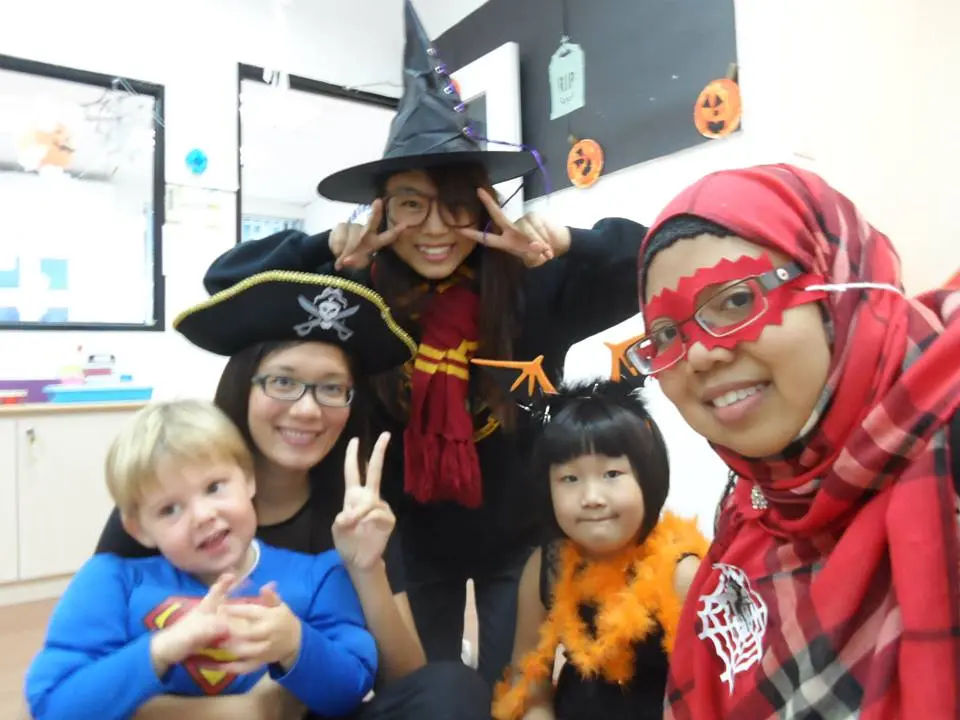
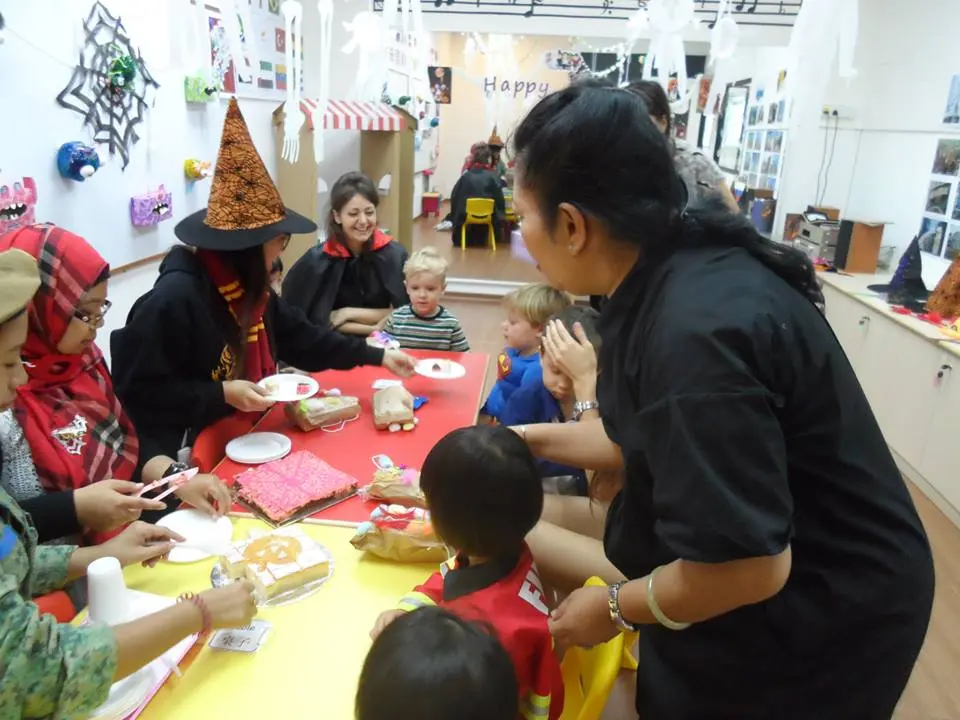
The photographs on this page capture moments of costume play, adult-supported craft work and classroom celebration. Experiences such as these can support creative expression, communication, fine-motor coordination and confidence when participating with others.
What Does a Preschool Halloween Celebration Involve?
A preschool Halloween celebration may combine costumes, creative activities, decorations, storytelling and social play.
The aim is not simply to hold a themed party. A carefully planned celebration can give children opportunities to explore ideas through movement, materials, conversation and pretend play.
Children may be encouraged to:
Celebration activities
- Dress as a familiar character.
- Create simple decorations.
- Work with paper, glue and soft materials.
- Participate in role-play.
- Observe colours, patterns and shapes.
- Join classmates in a shared activity.
- Talk about their costumes or creations.
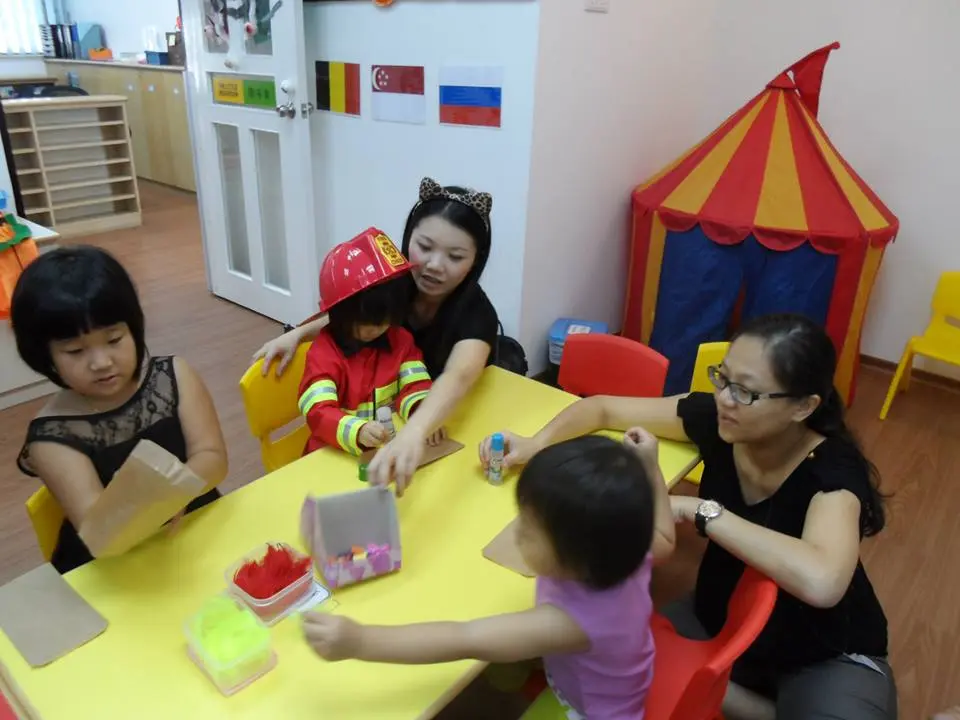
The photographs show a classroom environment prepared with themed decorations and children participating alongside teachers and adults.
Imaginative Play Through Costumes
Costumes allow children to temporarily take on another role. A child may pretend to be a firefighter, superhero, witch, animal or storybook character.
This kind of imaginative play can support children as they experiment with different actions and ways of communicating — you can discover how children learn through play throughout the day at Pegasus.
A child dressed as a firefighter may pretend to help someone. Another dressed as a superhero may invent a rescue story. A costume may also encourage a child to move, speak or interact in a different way from usual.
Costume play may support:
Areas of development
The value does not depend on how detailed or expensive a costume is. A hat, scarf or simple accessory can be enough to inspire pretend play.
Creating a Comfortable and Age-Appropriate Experience
Some young children enjoy costumes and decorations immediately, while others may feel uncertain about masks, unfamiliar clothing or dramatic themes.
A preschool celebration should therefore remain sensitive to individual comfort levels.
Teachers may:
How teachers help
- Avoid overly frightening imagery.
- Explain activities before they begin.
- Allow children to participate without wearing a costume.
- Offer familiar or simple dress-up options.
- Let children observe before joining.
- Remove masks where visibility or comfort is affected.
- Reassure children when needed.
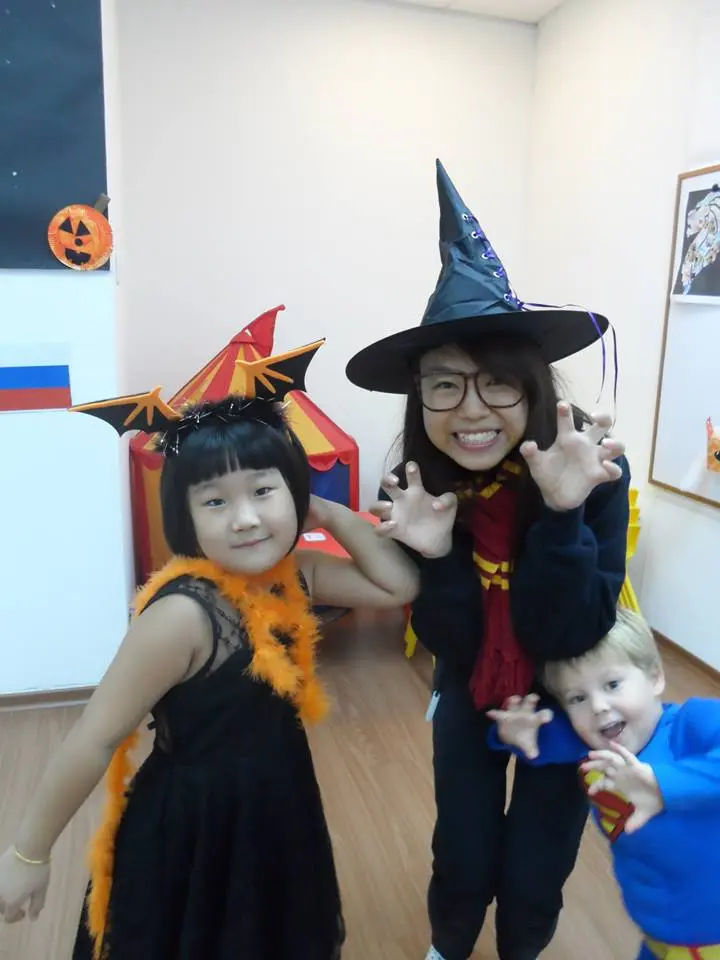
The photographs show playful costumes and decorations within a familiar classroom setting. The overall experience can be presented as imaginative and creative rather than scary.
Creative Craft Activities
Craft activities give children opportunities to transform simple materials into objects with new meaning.
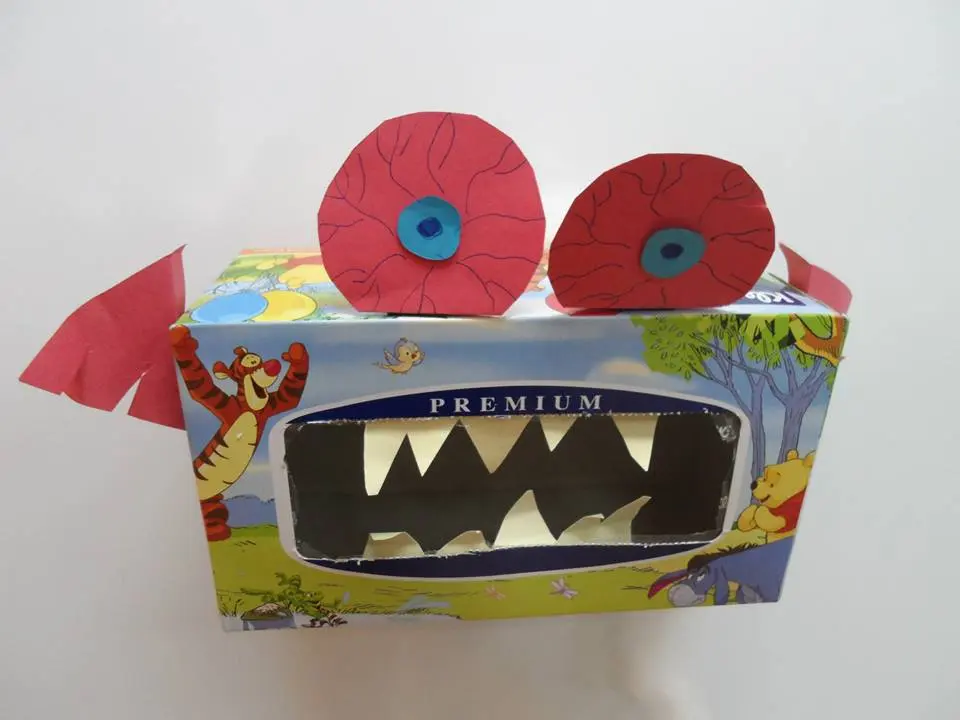
The gallery includes children working with cardboard, paper, glue, coloured pieces and soft materials. One finished example appears to be a playful monster-style box with large eyes and paper teeth.
Activities such as these may encourage children to:
Creative craft actions
- Choose colours.
- Position decorative pieces.
- Attach materials.
- Create facial features.
- Compare shapes and sizes.
- Make decisions about appearance.
- Describe what they are creating.
A recycled box can become a character, creature or storytelling prop. This demonstrates how ordinary materials may be reused creatively.
Developing Fine-Motor Skills Through Craft Work
Crafting involves a variety of small and controlled movements.
Children may need to pick up paper pieces, hold a glue stick, press materials onto cardboard or position small decorative items.
These actions can support:
Fine-motor skills
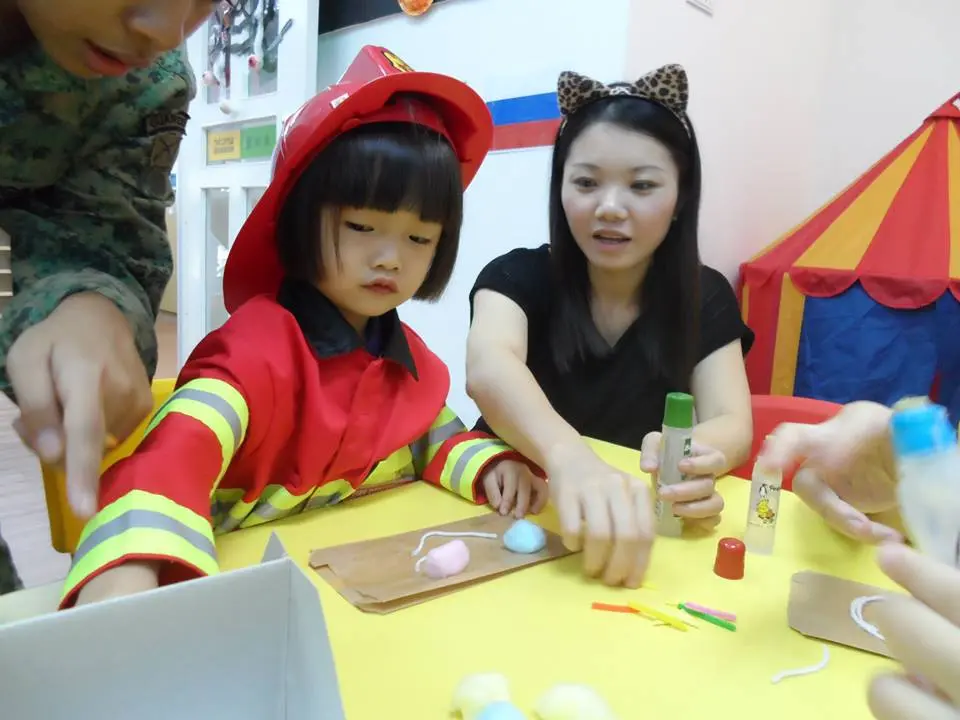
The photographs show adults supporting children as they handle materials and make choices.
Teachers can prepare pieces that are suitable for the children’s age while still allowing them to participate actively.
Exploring Shape, Colour and Position
Halloween-themed crafts can introduce early mathematical and visual concepts in a natural way.
Children may notice:
Shapes and positions
- Circles used for eyes.
- Triangles used for teeth.
- Rectangles used for a box.
- Large and small shapes.
- Matching or contrasting colours.
- Objects placed above, below or beside one another.
Teachers might ask:
Questions teachers might ask
- How many eyes does your character have?
- Which shape would work for the teeth?
- Where should this piece go?
- Which circle is larger?
- What colour would you like to add?
- Are the eyes close together or far apart?
These questions help children connect creative work with comparison, counting and spatial language.
Learning Through Open-Ended Art
There is a difference between following a fixed craft template and engaging in open-ended art.
A teacher may demonstrate how materials can be joined while still allowing children to decide how their work should look. One creation may have two eyes, while another may have several. A child may choose unusual colours or position pieces differently.
Open-ended creative work supports decision-making because there is more than one acceptable result.
The focus becomes:
Where the focus lies
- What the child notices.
- Which choices the child makes.
- How the materials are used.
- How the child explains the creation.
- What new ideas emerge during the process.
The finished product is important to the child, but the thinking and exploration behind it are also valuable.
Adult Guidance Without Taking Over
Teachers and family members may support children during classroom craft activities.
Useful support can include:
Ways adults can help
- Preparing safe materials.
- Showing how to apply glue.
- Helping with difficult cutting.
- Holding an object steady.
- Offering limited choices.
- Asking open-ended questions.
- Encouraging children to try independently.
- Helping only when needed.
The adult should avoid completing most of the project on the child’s behalf.
A helpful approach is to demonstrate one step, allow the child to attempt it and then offer assistance if necessary. This helps preserve the child’s ownership of the work.
Communication Through Creative Activities
Craft and costume activities create natural reasons for children to speak and listen.
They may talk about:
Conversation starters
- Who they are pretending to be.
- What their character can do.
- Which materials they need.
- Where a piece should be placed.
- How their creation feels.
- What they want to add next.
Teachers can introduce descriptive vocabulary such as:
Descriptive vocabulary
At Pegasus International Preschool, children receive exposure to English, Chinese and Japanese within the school environment. Familiar celebration activities may provide meaningful settings for hearing and using words across different contexts.
Social Learning During Group Celebrations
A classroom celebration brings children and adults together around a shared theme.
Children may observe one another’s costumes, exchange ideas and participate in group photographs or activities.
These experiences may support:
Social skills to practise
- Taking turns.
- Listening to others.
- Sharing materials.
- Joining a group.
- Noticing similarities and differences.
- Respecting another child’s choices.
- Expressing interest in someone else’s creation.
A child may be excited to show a costume, while another may prefer to observe quietly. Both forms of participation can be accepted.
Teachers can support respectful interaction by encouraging positive comments rather than comparisons about whose costume or craft is “best”.
Building Confidence and Self-Expression
Costume play may give children a safe opportunity to express a different side of themselves.
A child who is usually quiet may become more animated while pretending to be a superhero. Another may feel proud describing a handmade object.
Confidence can be supported when adults:
How adults build confidence
- Listen with interest.
- Avoid correcting imaginative ideas unnecessarily.
- Acknowledge effort.
- Invite children to explain their choices.
- Allow different forms of participation.
- Avoid pressuring children to perform.
The goal is not to require every child to speak in front of a group. Self-expression can happen through costume, movement, art or conversation.
Connecting Halloween Activities with Play-Based Learning
Play-based learning allows children to explore ideas through action, imagination and interaction.
A Halloween activity may bring together several areas of learning:
Creative development
Children use colour, shape and materials to make decorations.
Language development
They describe costumes, characters and stories.
Physical development
They handle craft tools, move in costume and participate in classroom activities.
Social development
They share materials, communicate and join group experiences.
Cognitive development
They plan where to place materials and consider how parts fit together.
Imaginative development
They take on roles and invent characters or scenarios.
This demonstrates how one playful experience can support several connected areas of preschool learning — you can explore our preschool curriculum in Singapore to see how these areas connect.
Connection with Inquiry-Based Learning
Inquiry can also take place during a themed celebration.
Teachers may invite children to investigate materials and ideas by asking:
Questions that invite inquiry
- How can we make the box look like a creature?
- What could we use for the eyes?
- How can we make the teeth stand out?
- What happens when we add more pieces?
- How could this character move?
- What story might involve this creature?
These questions encourage children to think, test possibilities and communicate their reasoning — you can learn how inquiry encourages creative thinking.
The teacher does not need to provide a single correct answer. The activity can develop according to the child’s observations and imagination.
Connection with the Reggio Emilia-Inspired Approach
A Reggio Emilia-inspired approach recognises that children communicate in many ways.
Costume, movement, painting, construction, drawing and dramatic play can all become forms of expression — read more about our Reggio Emilia-inspired approach.
In this type of environment, craft materials are not used only to reproduce an adult-made model. They can become tools for representing ideas.
A child may use a box to create a creature, then use that creation in a story. The story may later lead to drawing, movement or group discussion.
The classroom environment also contributes to the experience. Decorations, displayed work and accessible materials can invite children to explore the theme in different ways.
Using Recycled and Everyday Materials
The gallery appears to include a decorated cardboard or tissue box used as the base of a craft project.
Using recycled materials in art can help children understand that ordinary objects may be given a new purpose.
Suitable materials might include:
Recycled craft materials
These materials can support creativity because they do not always suggest one fixed outcome.
Teachers should check that items are clean, safe and appropriate for the children’s age.
Celebrating Cultural Experiences Respectfully
Halloween is not observed in the same way by every family.
In an international preschool community, families may have different cultural, religious or personal views about themed celebrations.
The school can support inclusion by:
Ways to support inclusion
- Explaining the nature of the activity.
- Keeping themes child-friendly.
- Focusing on creativity and imaginative play.
- Offering flexible participation.
- Communicating with parents.
- Avoiding assumptions about family practices.
This allows the celebration to remain welcoming while respecting different backgrounds.
Continuing Imaginative Play at Home
Parents can extend similar learning at home using simple materials.
Children might create a character from a recycled box, make a paper hat or use fabric pieces for dress-up play.
Useful materials may include:
- Cardboard.
- Paper.
- Washable crayons.
- Child-safe glue.
- Fabric.
- Ribbons.
- Reusable containers.
- Stickers.
- Large craft shapes.
Parents can ask:
Questions parents can ask
- Who is your character?
- What can it do?
- Which part would you like to add next?
- How did you choose these colours?
- What story can we make together?
- What else could this box become?
The aim is to support the child’s ideas rather than produce a polished adult-designed item.
Photo Gallery
The gallery below captures children and adults participating in costume play, Halloween-themed craft work and shared classroom activities. The photographs show moments of creativity, adult guidance, imaginative expression and social interaction within a decorated preschool environment.
Frequently Asked Questions
What can preschool children learn from Halloween activities?
Age-appropriate Halloween activities may support imagination, language, social interaction, fine-motor coordination and creative decision-making. Children can explore characters, colours, shapes and materials through costume play and crafts.
Are Halloween activities suitable for toddlers?
They can be suitable when the activities are gentle, familiar and carefully supervised. Toddlers may enjoy simple costumes, large craft materials, music and pretend play. Frightening masks or decorations should be avoided.
How do costumes support imaginative play?
Costumes give children a visual and physical starting point for pretending. They may take on a character, invent actions, tell stories and communicate with others through role-play.
How do Halloween crafts support learning?
Craft activities may help children practise grasping, gluing, arranging and positioning materials. They can also introduce colour, shape, counting, comparison and spatial vocabulary.
How can parents create simple costume and craft activities at home?
Parents can provide cardboard, paper, fabric and safe recycled materials. Children can create a hat, mask or character and then use it in imaginative play. Open-ended questions can encourage them to explain their ideas.
Discover Creative and Playful Learning at Pegasus
Costume play, creative construction and shared celebrations can give children meaningful opportunities to imagine, communicate and work with different materials. You are welcome to visit the school, explore the classroom environment and speak with the team about a suitable programme for your child.