If you are comparing preschools in Singapore, two approaches come up again and again: Reggio Emilia and Montessori. Both are child-centred, both began in Italy, and both look very different from a worksheet-and-rote classroom. But they are not the same, and understanding how they differ can help you choose the environment that fits your child. This is a balanced guide to how the two compare — not an argument that one is better than the other.
If you would like a fuller explanation of one approach on its own first, see our parent guide to the Reggio Emilia approach.
Reggio Emilia vs Montessori at a glance
In the simplest terms: Montessori gives children freedom within a carefully prepared environment of specially designed materials, each used in a particular way, so children move through a fairly structured sequence at their own pace. Reggio Emilia starts from children's own questions and interests, letting learning emerge through projects, open-ended materials and lots of expression, with teachers documenting and building on what children show them. Montessori leans toward individual, self-directed work with a defined path; Reggio leans toward collaborative, emergent inquiry with a more open path.
Origins and philosophy
Montessori grew from the work of Dr Maria Montessori, an Italian physician and educator, in the early 1900s. She observed children closely and designed an environment and set of materials to match how young children naturally learn — through the senses, movement and purposeful activity.
The Reggio Emilia approach developed after the Second World War in the town of Reggio Emilia in northern Italy, shaped by the educator Loris Malaguzzi and the families of the region. It is built on a strong image of the child as capable, curious and full of potential, and on the idea that children have many ways — a "hundred languages" — of exploring and expressing ideas.
How each approach sees the child
Both approaches deeply respect the child, but they frame that respect differently. In Montessori, the child is a naturally motivated learner who flourishes when given freedom to choose meaningful work within thoughtful limits. In Reggio Emilia, the child is seen as a competent co-author of their own learning — someone whose theories and questions genuinely shape where a project goes.
The role of the teacher
In a Montessori classroom, the teacher is often described as a guide: they prepare the environment, observe carefully, and introduce each material at the right moment, then step back so the child can work independently. In a Reggio-inspired classroom, the teacher acts more as a co-researcher and listener — provoking curiosity, asking open questions, and documenting children's thinking so it can be revisited and extended. In both, the adult talks less and observes more than in a traditional class.
The classroom environment and materials
This is one of the clearest differences. Montessori classrooms use a specific set of beautifully made, often self-correcting materials — for practical life, sensorial exploration, language and mathematics — and each has a particular purpose and way of being used. Mixed-age groups and long, uninterrupted work periods are common, so children can concentrate deeply and learn from one another.
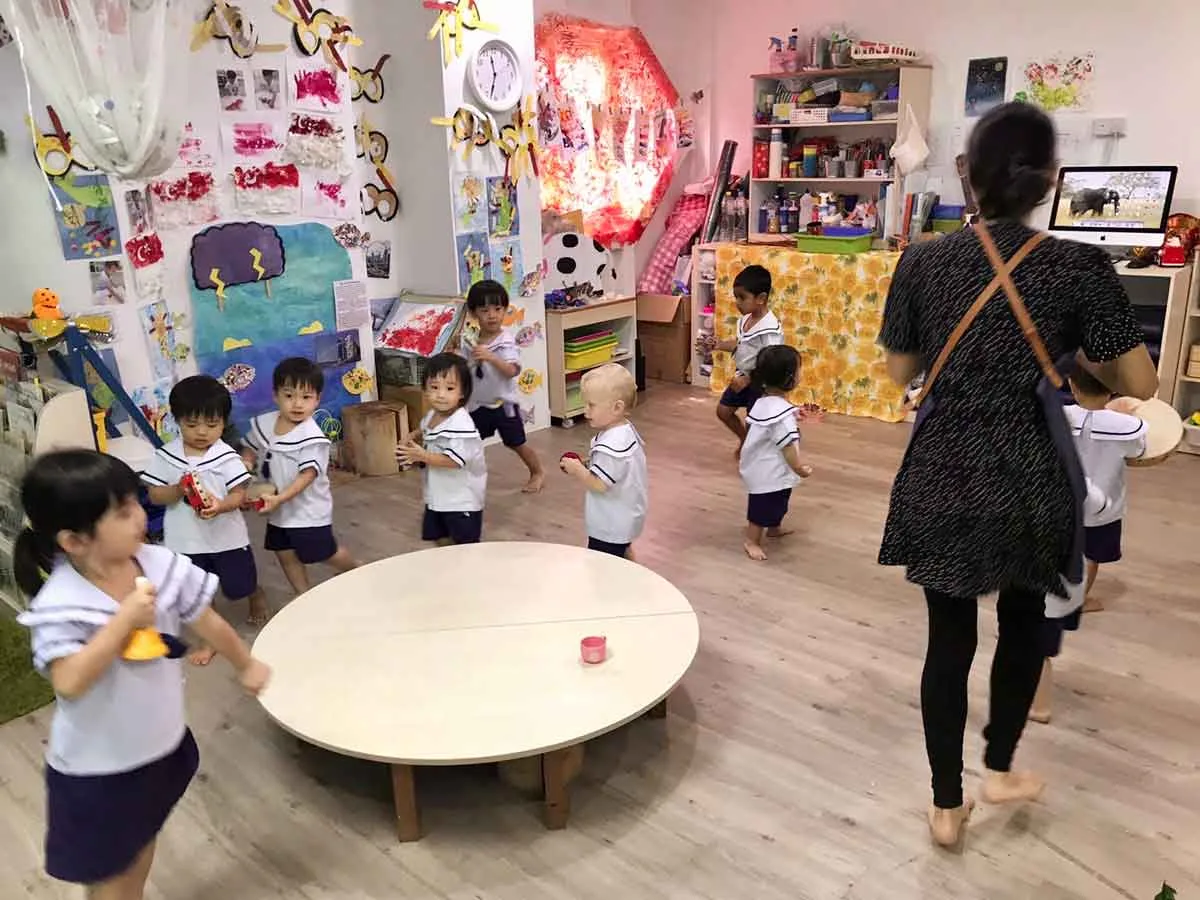
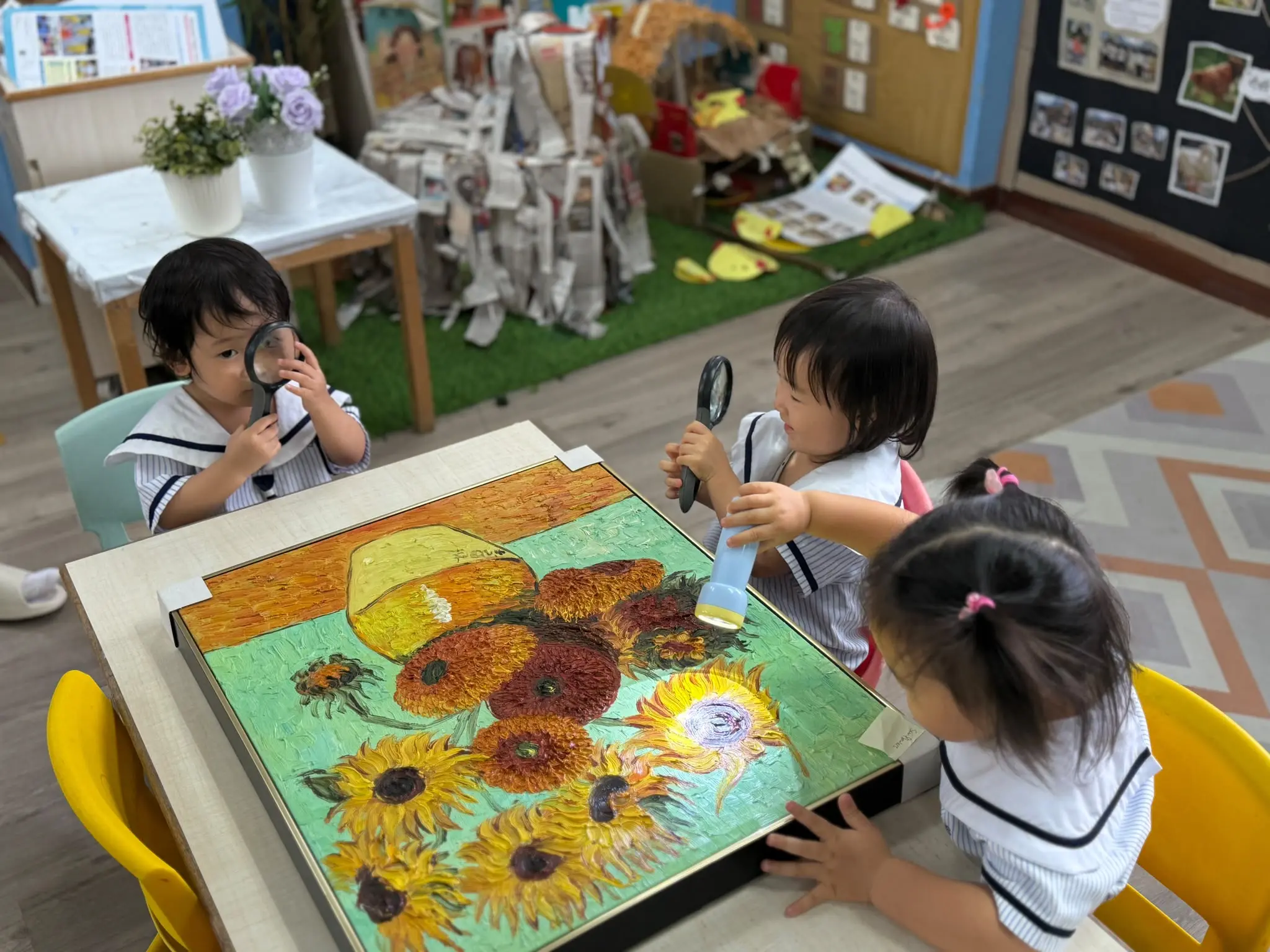
Reggio-inspired environments treat the space itself as a kind of teacher, rich with natural and open-ended materials — clay, light, loose parts, paint, recycled objects — that children can use in many ways. Rather than a fixed sequence of materials, the resources shift to support whatever the children are investigating.
Project work, documentation and how learning is structured
Montessori follows a fairly sequential curriculum: materials build on one another in a considered order, and children progress through them individually. Reggio Emilia is more emergent — long-running projects grow out of the children's interests, often involve the whole group, and are made visible through documentation such as photographs, transcripts of conversations and displays of children's work. That documentation is not decoration; it helps teachers and children reflect and decide what to explore next.
What the two approaches share
It is easy to focus on differences, but Reggio Emilia and Montessori have a lot in common. Both put the child at the centre, value hands-on and sensory learning, and prepare a calm, beautiful environment. Both encourage independence, concentration and respect for others, and both prefer real experiences over memorisation and rote drills. A child who thrives in one will often recognise much that feels familiar in the other.
The key differences, summarised
If you remember only a few things: Montessori uses a defined set of self-correcting materials and a more sequential, individual path; Reggio uses open-ended materials and an emergent, collaborative, project-based path. Montessori has established teacher-training and certification pathways, whereas Reggio Emilia is an educational philosophy rather than a certified or franchised method — which is why schools that draw on it usually describe themselves as "Reggio-inspired" and adapt it to their own context.
Which approach might suit your child?
There is no universally "better" approach, and much depends on the individual school and teachers. Some children love the order, focus and clear progression of Montessori materials. Others come alive when they can follow their own questions, work with others on a shared project, and express ideas through art, building and storytelling — the heart of the Reggio approach. The most useful thing you can do is picture your own child in each environment, then visit and see how it feels in practice.
Questions to ask when you visit a preschool
Whichever approach a school follows, a visit tells you far more than a label. Helpful questions include: How do children spend a typical day? How do teachers decide what to teach next? How do you observe and record each child's progress? How much of the day is child-chosen versus teacher-led? How are families kept in the loop? Listen for whether the answers match what you see happening in the room.
How Pegasus applies Reggio-inspired learning
Pegasus International Preschool in Novena, Singapore is Reggio-inspired: we draw on Reggio principles — inquiry, project work, documentation and open-ended materials — and adapt them for our trilingual environment in English, Mandarin and Japanese. We are not a certified Montessori or Reggio school; the approach is lived in our classrooms rather than printed on a certificate. If you would like to see how Pegasus applies Reggio-inspired learning in Singapore, or you are weighing up preschool stages, our guide to nursery versus kindergarten in Singapore may also help. The best next step is always to book a school tour and watch a real Reggio-inspired day for yourself.