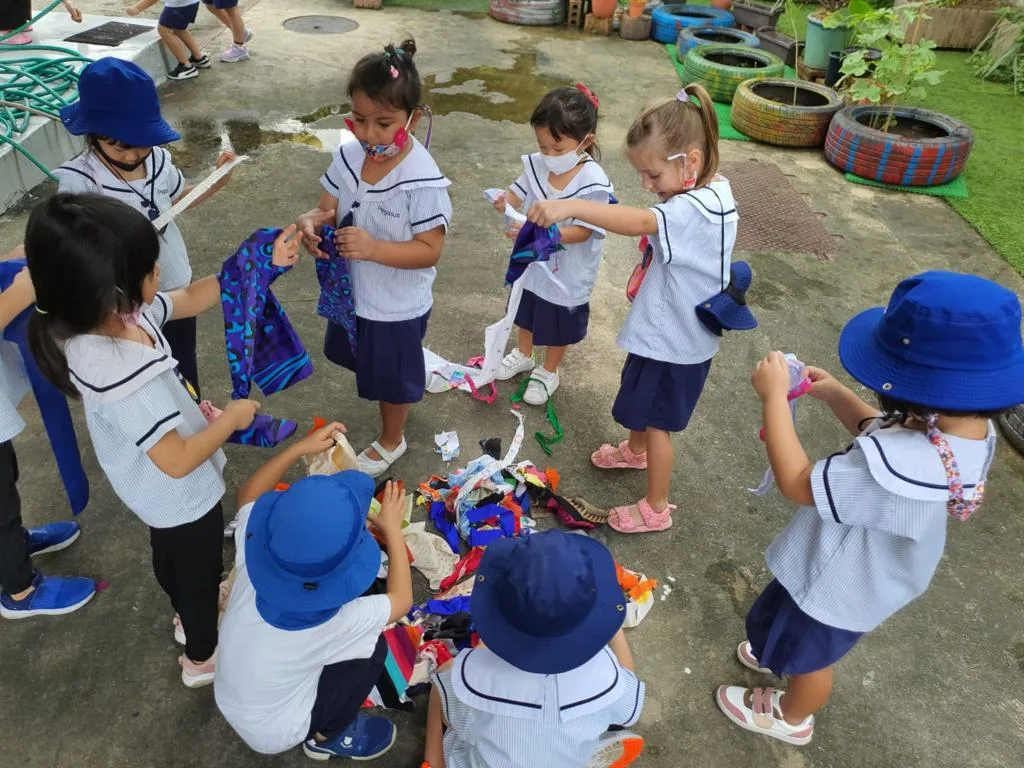
Open-ended questions are among the simplest and most powerful tools a parent has. Unlike questions with a single right answer, they invite a child to think out loud, to wonder, and to share their own ideas. At Pegasus International Preschool, this way of asking sits at the heart of our Reggio Emilia-inspired, inquiry-based approach — we listen closely to children, respect their ideas, and give them time to reflect and solve problems for themselves. This article shows how you can bring that same gentle curiosity into everyday conversations at home.
Best suited for
Parents across all preschool stages — with simple ideas for adapting each question to your child’s age.
What is an open-ended question?
A closed question usually has a short, fixed answer. An open-ended question invites a fuller reply. Compare these two:
- Did you like the story? — often answered with a single “yes” or “no”.
- What did you like about the story? — invites your child to notice, choose and explain.
Both kinds of question are useful. Closed questions are quick and clear; open questions encourage reflection and give children more room to think. The aim is simply to add a few more open questions to the everyday mix.
Why open-ended questions matter
Used gently and often, open questions can support a great deal of a child’s development — language, confidence, reasoning, creativity, emotional expression, seeing another point of view, problem-solving, and, perhaps most of all, connection with you. There are no guarantees, and every child grows at their own pace; but a home where children are genuinely listened to is a wonderful place to grow.
How to ask without testing
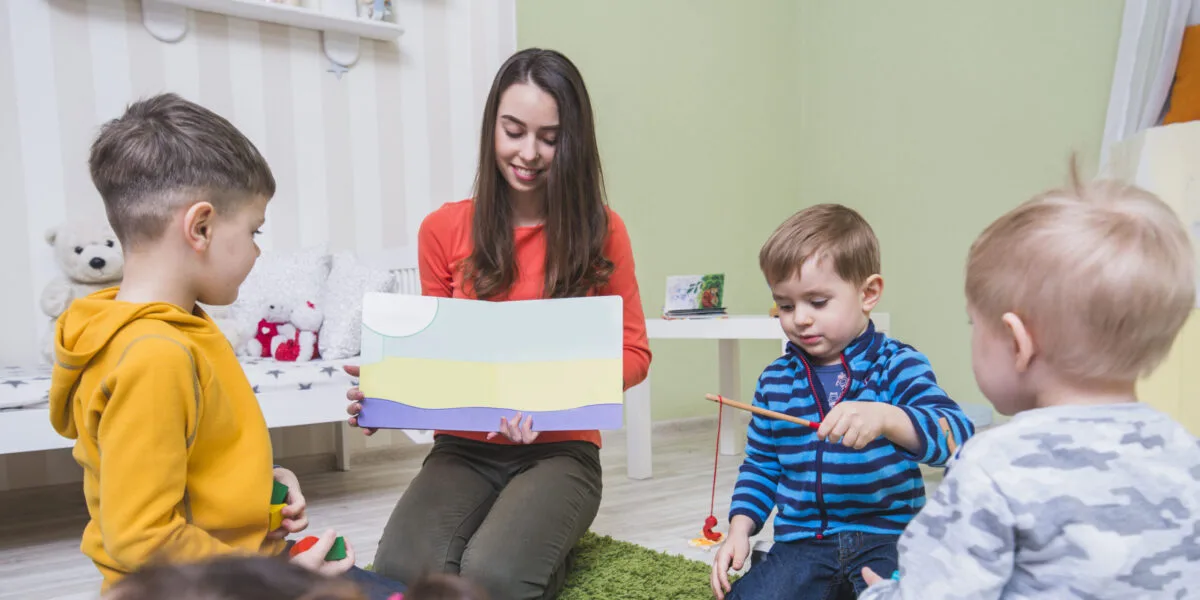
Children can tell the difference between a warm question and a quiz. Tone, timing and body language matter as much as the words. Ask when things are relaxed, get down to your child’s level, and show that you are genuinely interested in whatever they say. The aim is to understand, not to test — and there is no single correct answer.
Give children thinking time
After you ask, resist the urge to fill the quiet. Silence is not a problem; it usually means your child is thinking. Give them a few unhurried seconds, and try not to interrupt or finish their sentences. Thinking time is where the best answers are born.
Use follow-up prompts
Once your child has answered, a gentle follow-up keeps the conversation going and shows you are truly listening:
- Tell me more.
- What makes you think that?
- What happened next?
- How did you decide?
- What else could happen?
- Is there another way?
Accept surprising answers
Children see the world in wonderfully unexpected ways. When an answer surprises you, stay curious rather than correcting it. The point is not to be right — it is to understand how your child is thinking, and to let them know their ideas are worth hearing.
Share the conversation
After your child has spoken, offer your own answer to the same question. This turns a one-way question into a real conversation, models thoughtful language, and quietly tells your child that this is something you do together.
Adapt questions for different ages
The same spirit works at every stage — only the wording changes:
- Below 17 months: your child may not answer in words yet, and that is perfectly fine. Narrate what you see — “You’re looking at the red ball” — and pause. You are modelling language and building the foundations of conversation.
- Smart Toddlers: keep it short and concrete — “What do you see?” or “What is this?” Our Smart Toddlers programme uses the same everyday, sensory-rich approach.
- Nursery 1 and 2: add a gentle “why” or “how” — “How did you build it?” or “Why did you choose that colour?”
- Kindergarten 1 and 2: invite fuller reasoning — “What might happen if…?” or “Is there another way to solve it?”
This is the same thread of thinking that runs through our inquiry-based learning at school, where children are encouraged to ask, test ideas and reflect.
Use everyday moments
You do not need a special time for open questions — ordinary moments are ideal. Try one during:
- meals
- bath time
- travel
- outdoor walks
- story time
- building and drawing
- bedtime
A small bank of examples
Here are a few open questions to keep in mind, grouped by what they invite. Choose one or two that fit the moment rather than working through the list:
- Observation: What do you notice? What has changed? What can you see, hear or smell?
- Imagination: What might happen next? What could this become? If it could talk, what would it say?
- Emotions: How do you think they feel? What might help? For more on this, see our guide to questions that help children talk about their emotions.
- Problem-solving: What could we try? Is there another way? What do we need first?
- Reflection: What worked well? What was tricky? What would you do differently?
If you would like more questions for getting to know your child as a person, our companion article shares meaningful questions to get to know your child better, and you can find our full collection of guides in the inquiry-based learning section.
A closing thought
Open-ended questions are less about the answers and more about the thinking — and the connection — they invite. You do not need to ask them perfectly, or often. A single genuine “What do you think?”, followed by unhurried listening, tells your child that their ideas matter. That is the quiet heart of inquiry, at school and at home.