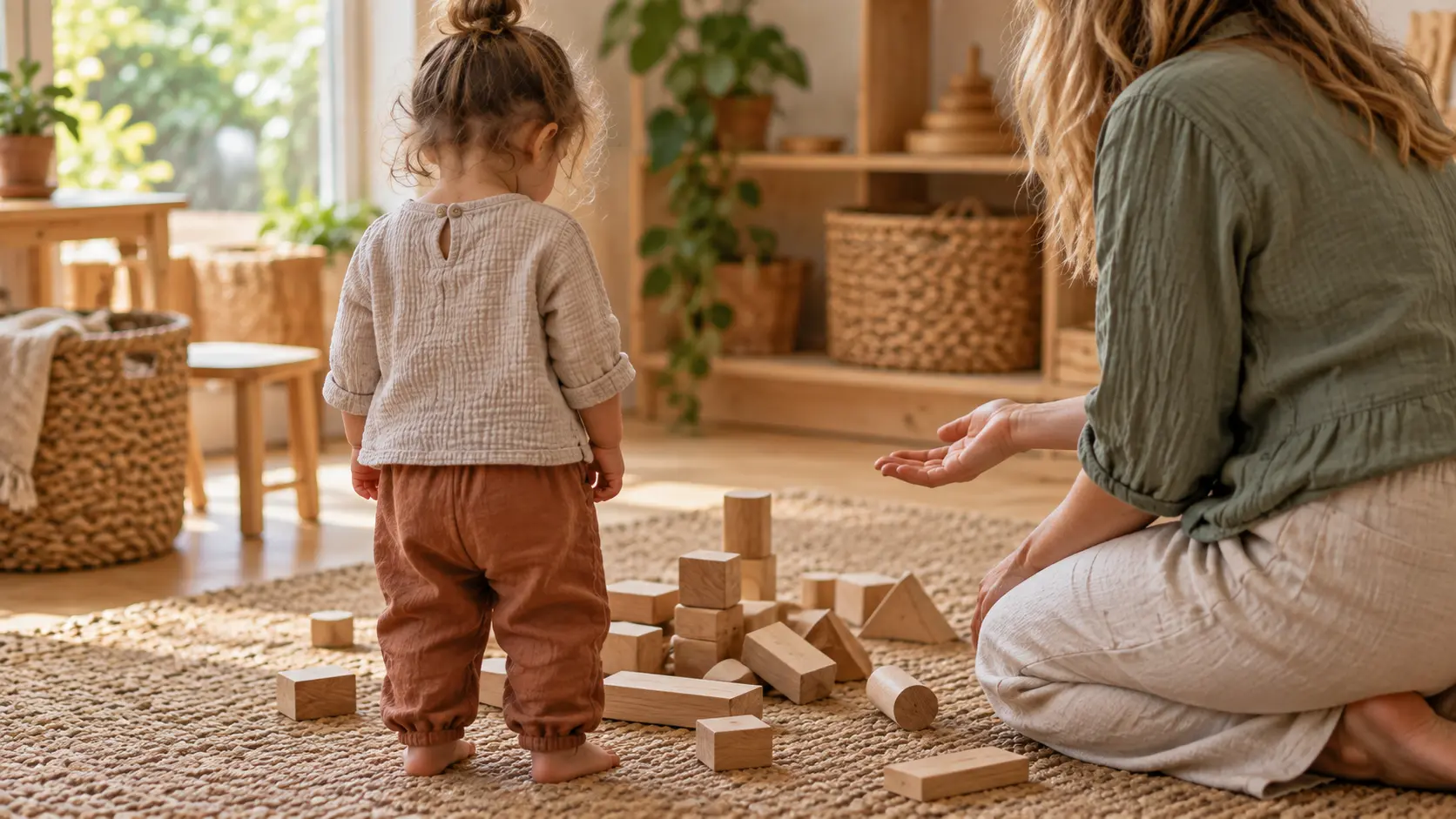
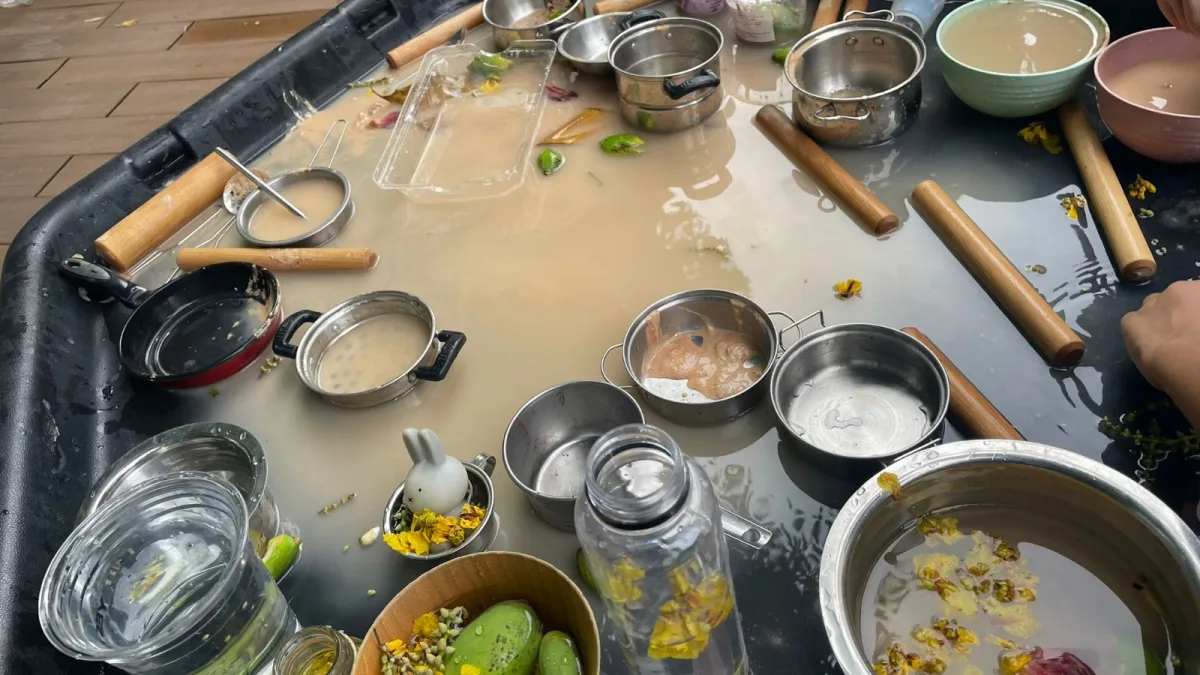
He carries a cardboard box across the room, fills it with blocks, empties it and starts again. When you invite him to sit for a story, he moves away. Later, when another child takes his favourite toy, he cries before he can explain what happened. You may wonder: is he learning? Why is sitting still difficult? How can I help him use words instead of becoming upset? For families raising boys aged two to three, these questions can feel especially familiar — and understanding early development helps us look more closely at what a child needs, and choose a preschool programme that responds thoughtfully.
Do Boys Need a Different Way of Learning?
There is no single learning style that fits every boy. Some boys enjoy energetic play; others prefer drawing, stories or watching before joining in. A child’s sex alone cannot tell us how much movement, reassurance or language support he needs.
A more useful starting point is observation. What holds his interest? How does he communicate? What helps him feel comfortable? How does he respond when something becomes difficult?
The ideas below support young children generally. They can be particularly useful when your son enjoys active exploration, or is still developing the words to express himself.
How Do Everyday Conversations Support Brain Development?
Young children learn through responsive exchanges with caring adults. Harvard’s Center on the Developing Child describes these back-and-forth interactions as “serve and return”: a child points, speaks or makes a gesture, and an adult responds.
Imagine your son rolling a toy car down a cardboard ramp. He looks at you and says, “Again!” You respond: “Again! It went fast. Shall we try this ramp?” Then you pause, and let him answer through a word, a gesture or an action. This creates a conversation around something that already matters to him.
At home, you can follow his interest, describe what he notices and leave space for his response. Communication does not always begin with a complete sentence.
My Son Is Always Moving. Can He Still Be Learning?
Movement can be part of a meaningful learning experience. Carrying materials, building with boxes or testing a ramp gives adults natural opportunities to introduce words such as heavy, higher, under and slow.
A child making a tunnel out of cardboard may compare sizes, notice why it collapses and invite a friend to help. The important question is not whether he is sitting still, but what he is exploring and how adults support that exploration.
Offer safe opportunities to move, alongside quieter activities and predictable routines. Observe where he engages most readily, rather than expecting every activity to hold his attention equally.
Why Is Waiting or Stopping So Difficult?
Remembering a rule, pausing before acting and shifting attention all involve executive function skills. These develop gradually, through experience and practice.
A two-year-old may understand “wait” without consistently managing to wait when excited. Adults can make that practice manageable:
- Give a short, clear instruction: “One car at a time.”
- Stay nearby and help with turn-taking.
- Offer a predictable transition: “One more turn, then we put the cars away.”
- Use simple games that involve stopping, starting and taking turns.
Keep expectations appropriate to the individual child. Supportive environments and age-appropriate activities are what help children practise these developing skills.
How Can I Help My Son Express Big Feelings?
When a tower falls or a friend takes a toy, your son may need help making sense of the experience. Begin with a calm response and a clear boundary: “You wanted the truck. You’re upset. I won’t let you hit. I’ll help you ask.”
When he is ready, offer a short phrase he can borrow: “My turn, please,” or “Help me.”
Naming what a child is experiencing creates an opportunity to connect feelings with language, and a responsive exchange gives him a supported way to practise communicating. If you would like more ways into these conversations, our guide to questions that help children talk about their emotions offers gentle starting points.
Should I Wait Because Boys Sometimes Talk Later?
If you are concerned about your son’s communication, discuss it with his doctor rather than relying on the idea that “boys talk late.”
Describe what you observe: how he communicates his needs, how he responds to familiar language, how he interacts with others, and whether he has lost any skills he previously had.
The American Academy of Pediatrics advises families to act on speech and language concerns early. Preschool observations can inform that conversation, but they do not replace a professional assessment.
What Should I Look for in a Preschool for My Son?
Look for educators who notice your child’s interests and respond to his communication, including gestures and emerging words. Ask how they support movement, transitions, friendships and moments of frustration.
Useful questions include:
- How would you help my child settle in?
- How do you support children who enjoy active exploration?
- What do you do when a child cannot yet explain what they need?
- How will you share observations of his learning with us?
Ask to see examples of learning documentation. These help you understand how teachers observe a child’s thinking and plan what to offer next — a practice at the heart of the Reggio Emilia approach.
Discover Pegasus International Preschool in Novena
Pegasus International Preschool is a Reggio Emilia–inspired preschool for children aged 18 months to six years, at 72 Keng Lee Road, directly opposite KK Women’s and Children’s Hospital.
English is the main language of our classroom, with Mandarin and Japanese woven naturally through the day. Our approach values children’s questions, their exploration and the many different ways they express an idea.
You can explore our preschool programmes or read more about our trilingual language environment.
See How the Environment Feels for Your Child
A school visit gives you time to meet the educators, explore the classrooms and talk about your son’s interests, routines and communication. Your child is welcome to come along.
Bring your questions and discover whether Pegasus feels right for your family — book a free, no-obligation school tour.